Quotessence
Home / Authors / Karl Wilhelm Friedrich Schlegel Books
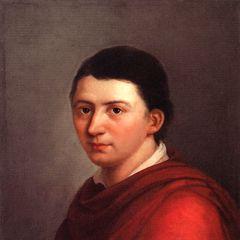
Karl Wilhelm Friedrich Schlegel

Karl Wilhelm Friedrich Schlegel Books

Poet

No books found for this author.

Related Quotes

“Poetry can be criticized only through poetry. A critique which itself is not a work of art, either in content as representation of the necessary impression in the process of creation, or through its beautiful form and in its liberal tone in the spirit of the old Roman satire, has no right of citizenship in the realm of art.”

“If one believes philosophers, then what we call religion is only a deliberately popularized or an instinctively artless philosophy. Poets seem to consider religion rather as a variation of poetry which by misjudging its proper beautiful game takes itself too seriously and one-sidedly. Philosophy, however, admits and recognizes that it can begin and complete itself only with religion. Poetry seeks only to strive for the infinite and despises worldly utility and culture, which are the true antitheses of religion. Eternal peace among artists is thus not far away.”

“Where philosophy ends, poetry must commence. There should not be a common point of view, a natural manner of thinking which standsin contrast to art and liberal education, or mere living; that is, one should not conceive of a realm of crudeness beyond the boundaries of education. Every conscious link of an organism should not perceive its limits without a feeling for its unity in relation to the whole. For example, philosophy should not only be contrasted to non-philosophy, but also to poetry.”

“What do the few existing mystics still do? -- They more or less mold the raw chaos of already existing religion. But only in an isolated, insignificant manner, through feeble attempts. Do it in a grand manner from all aspects with unified efforts, and let us awaken all religions from their graves, newly revivify and form the immortal ones through the omnipotence of art and science.”

“The French Revolution, Fichte's Theory of Knowledge, and Goethe's Wilhelm Meister are the three greatest tendencies of the age. Whoever takes offence at this combination, and whoever does not consider a revolution important unless it is blatant and palpable, has not yet risen to the lofty and broad vantage point of the history of mankind.”

“The two basic maxims of the so-called historical criticism are the postulate of the common and the axiom of the ordinary. Postulate of the common: everything really great, good, and beautiful, is improbable, since it is extraordinary and therefore at least suspect. Axiom of the ordinary: our conditions and environment must have existed everywhere, for they are really so natural.”

“It is a thoughtless and immodest presumption to learn anything about art from philosophy. Some do begin as if they hoped to learnsomething new here, since philosophy cannot and should not do anything further than develop the given art experiences and the existing art concepts into a science, improve the views of art, and promote them with the help of a thoroughly scholarly art history, and produce that logical mood about these subjects too which unites absolute liberalism with absolute rigor.”

“As long as the artist invents and is inspired, he remains in a constrained state of mind, at least for the purpose of communication. He then wants to say everything, which is the wrong tendency of young geniuses or the right prejudice of old bunglers. Thus, he fails to recognize the value and dignity of self-restraint, which is indeed for both the artist and the man the first and the last, the most necessary and the highest goal.”

“If the mystical lovers of the arts, who consider all criticism dissection and all dissection destruction of enjoyment, thought logically, an exclamation like "Goodness alive!" would be the best criticism of the most deserving work of art. There are critiques which say nothing but that, only they do so more extensively.”

“The analytical writer observes the reader as he is; accordingly, he makes his calculation, sets his machine to make the appropriate effect on him. The synthetic writer constructs and creates his own reader; he does not imagine him as resting and dead, but lively and advancing toward him. He makes that which he had invented gradually take shape before the reader's eyes, or he tempts him to do the inventing for himself. He does not want to make a particular effect on him, but rather enters into a solemn relationship of innermost symphilosophy or sympoetry.”

“German writings attain popularity through a great name, or through personalities, or through good connections, or through effort,or through moderate immorality, or through accomplished incomprehensibility, or through harmonious platitude, or through versatile boredom, or through constant striving after the absolute.”