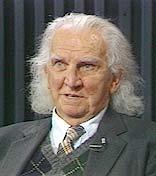
“[There will be movement toward] behavioral economics... [which] involves study of those aspects of men's images, or cognitive and affective structures that are more relevant to economic decisions.” MenDecisionStudyEconomicMovementAspectEconomicsStructureRelevantCognitiveBehavioral Economics Author:Kenneth E. Boulding
“The evolutionary vision is agnostic in regard to systems in the universe of greater complexity than those of which human beings have clear knowledge. It recognizes aesthetic, moral, and religious ideas and experiences as a species, in this case of mental structures or of images, which clearly interacts with other species in the world's great' ecosystem.” WorldHumansIdeasUniverseReligiousHuman BeingsMoralVisionCasesClearGreaterRegardStructureSpeciesComplexityAestheticAgnosticEcosystems Author:Kenneth E. Boulding
“In view of the importance of philanthropy in our society, it is surprising that so little attention has been given to it by economic or social theorists. In economic theory, especially, the subject is almost completely ignored. This is not, I think, because economists regard mankind as basically selfish or even because economic man is supposed to act only in his self-interest; it is rather because economics has essentially grown up around the phenomenon of exchange and its theoretical structure rests heavily on this process.” ThinkingMenLittlesHas BeensSelfGivenSocialProcessInterestViewsAttentionEconomicSubjectsMankindTheoryEconomicsImportanceRegardStructureSelfishOur SocietyPhenomenonSurprisingPhilanthropyIgnoredEconomistTheoreticalSelf InterestTheoristsEconomic Theory Author:Kenneth E. Boulding
“It [knowledge] is clearly related to information, which we can now measure; and an economist especially is tempted to regard knowledge as a kind of capital structure, corresponding to information as an income flow. Knowledge, that is to say, is some kind of improbable structure or stock made up essentially of patterns - that is, improbable arrangements, and the more improbable the arrangements, we might suppose, the more knowledge there is.” KindMadeMightInformationFlowRegardStructurePatternsIncomeRelatedArrangementsEconomistTemptedImprobableCorrespondingMore Knowledge Author:Kenneth E. Boulding
“We never like to admit to ourselves that we have made a mistake. Organizational structures tend to accentuate this source of failure of information.” MadeMistakeInformationSourceStructureMade A MistakeOrganizationalAccentuateOrganizational Structure Author:Kenneth E. Boulding
“Human artifacts not only include material structures and objects, such as buildings, machines, and automobiles, but they also include organizations, organizational structures like extended families . . . tribes, nations, corporations, churches, political parties, governments, and so on. Some of these may grow unconsciously, but they all originate and are sustained by the images in the human mind.” MindHumansMayGovernmentPoliticalNationsGrowsChurchPartyObjectsBuildingMaterialsMachinesOrganizationStructureCorporationsHuman MindTribesPolitical PartiesAutomobileOrganizationalArtifactsExtended FamilyOrganizational Structure Author:Kenneth E. Boulding
“It is much more accurate to identify the factors of production as know-how (that is genetic information structure), energy, and materials, for, as we have seen, all processes of production involve the direction of energy by some know-how structure toward the selection, transportation, and transformation of materials into the product” KnowsEnergyProcessKnow HowInformationMaterialsProductsTransformationStructureProductionsFactorsAccurateSelectionTransportationFactors Of Production Author:Kenneth E. Boulding