Quotessence
Home / Authors / Kevin Hart Books
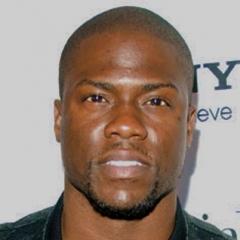
Kevin Hart

Kevin Hart Books

Actor

Related Quotes

“There’s nothing that I really want: The stars tonight are rich and cold Above my house that vaguely broods Upon a path soon lost in dark. My dinner plate is chipped all round (It tells me that I’ve changed a lot); My glass is cracked all down one side (It shows there is a path for me). My hands—I rest my head on them. My eyes—I rest my mind on them. There’s nothing that I really need Before I set out on that path.”

“When you're in these movie deals and the studios are talking, they're putting business deals and packages together, but they're making calls based on previous relationships. They go, "Oh, let's call this actor because we did this with him, and he might like him. Does he like him? Let's piece them together." There's a brain behind that puzzle, and I want to be the brain.”

“Sometimes when you hear so much and everybody is praising you, you can get lost in that. You can start thinking that you are on a higher pedestal than everyone else. So I try to stay level headed, humble and the best way to do that is to not really acknowledge it that much. I just keep grinding and working as hard as I can. I also set my goals higher so that I don't have time to be content with my place in life and in my career.”

“My road to success was a long road to success was a long road. You get out of something what you put into it. I put blood, sweat and tears into stand-up comedy and the entertainment realm in general. For me to just know be coming around is a blessing. It's a blessing and it's an honor. It makes me say I can get more and I can do more.”

“When I was in my early 20s I converted to Catholicism after a long period of searching. What I think drew me to the Catholic church is that in Catholicism, prayer suffuses all of one's life by virtue of the sacraments. Prayer is not something which occurs just on Sunday, it doesn't occur only at particular moments of intensity or by particular conventions, one's whole life is given up to prayer in many, many modes. And so everything to do with the faith is trying to put you in relationship with God and trying to make that relationship grow deeper and more mature.”

“Catholicism is the big house of Christianity. It's got many, many rooms in it. And I've always been attracted to the rooms which are to do with prayer. The mystical strain is the strain whereby the whole day can be given over to prayer through what we call lectio divina, prayerful reading of Scripture, through practice of meditation of when one uses the imagination and the intellect with respect to images, and then finally, and most difficult of all, contemplation, where one empties the mind of all images and all ideas, all concepts, in order to be completely attentive to God.”

“There seems to be something poetically that doesn't work or is limiting when you call God 'God' in a poem. When I tried to be honest with myself in my relationship with God, Christ is, on the one hand, completely dark, he's transcendent and unknown. On the other hand, he is completely imminent and completely knowable as Jesus. Our tradition speaks of him in both ways as transcendent but also as a lover who comes to us, and the two word 'Dark One' seem to me to contain both things, the transcendence and otherness of Christ, but also like a kind of dark lover who comes to us.”

“Divine love, agape, is self-sacrificing love, which sounds difficult, as it is, and not very attractive. If the best image we have of love is of a man who's been tortured and hung upon a cross to die an excruciating death, this is something that human beings find very, very hard to understand as love. But it is the highest Christian image of love.”

“The kind of love that God has for us, I think, is of an infinite longing for union, and the kind of love that God wants us to have for him, I think, is of this also endless longing. Now in eros we lose ourselves. I think erotic love transforms us, but it does so only momentarily. It has to be embedded in something much longer, a much bigger narrative called marriage or durable relationship or something like that.”

“I think what happens in a religious life is that we have those experiences of affirmation and that one starts to live a Christian life or a Jewish life or a Muslim life or a Buddhist life, by affirming that affirmation each day. Each day you say 'Yes' to that Yes. So the life of being a Christian for example, is always a life of double affirmation, that you each day say 'Yes' to those counter-experiences of saying 'Yes', even when you're not experiencing them at that time, you're remaining loyal to that experience.”

“In marriage for example, you say 'Yes' on the day you get married, 'I do', but each day you implicitly if not explicitly, also say 'Yes', by every act that one performs in a marriage, one is saying 'Yes', making a cup of coffee for one's wife or husband is a form of saying 'Yes' to the marriage vow that one is continuing the marriage by affirming it in one's deeds. And exactly the same in the religious life.”

“We don't always possess faith in the sense of having a clear embodiment of something to hang on to. The relationship between the intellect and faith is a very curious one. Sometimes the intellect can point us to faith, sometimes the intellect can stand in the way of faith. Sometimes, as St John of the Cross points out, we have to darken or blind the intellect in order to have faith.”

“The relationship we have with God is not the same over a life; sometimes, as with human relationships, it goes through bad patches and sometimes it becomes very intense. It is a terrifying thing to have a relationship with one's creator, to spend one's life so that one is trying to converge with one's creator seems an extraordinarily difficult and sublime thing. But at the same time it's extremely simple. One of the things which perpetually amazes me is that at any moment or any day, anyone who is alive can talk with the creator of the cosmos.”

“I think poetry can be a kind of secular way in which people can be led to approach the difficult parts of their life, where there's been loss, where there's sadness of a deep kind. If poetry can help people to be more at ease in expressing even to themselves a lot of the darkness and pain of ordinary human existence, then it's serving some kind of cultural role, perhaps more than a cultural role, perhaps it is serving something of a spiritual role.”

“Often poetry, especially the sort of poetry I write, is concerned with looking at the borders between the sensual and the spiritual and seeing them as divided, equivocal, that mystery somehow can break in to the ordinary. And we read poetry I think in part, to gain a sense of that intimacy with things that we can't understand that are unable to be understood but that buoy up our lives.”