Quotessence
Home / Authors / Margaret Atwood
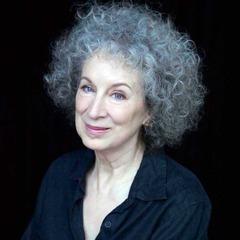
Margaret Atwood

Margaret Atwood Quotes

Poet

Filter quotes by topic

Famous Margaret Atwood Quotes

“If you want to be a writer, you should go into the largest library you can find and stand there contemplating the books that have been written. Then you should ask yourself, 'Do I really have anything to add?' If you have the arrogance or the humility to say yes, you will know you have the vocation.”

“In Heaven, there are no debts - all have been paid, one way or another - but in Hell there's nothing but debts, and a great deal of payment is exacted, though you can't ever get all paid up. You have to pay, and pay, and keep on paying. So Hell is like an infernal maxed-out credit card that multiplies the charges endlessly.”

“Somebody has been a complete ratbag all their life and they've gotten away with it, and they die happy and rich, we so much want to believe that they're going off to the halls of judgment, that their heart will be weighed against the feather of truth, that it will be heavy with sin and it will be eaten by a crocodile. It's almost essential to our well-being to have a fallback position like that. It may appear as if you've gotten away with it, but you'll pay for it later.”

“Plague has hung over human history. The biggest human extinction was after 1492 in North and South America when the mortality rate was 95 per cent, which is enormous. But again, I'm actually giving you grounds for optimism: There were enough to continue. The five per cent who made it through are what you need to survive a bottleneck, which we have been through before.”

“No more photos. Surely there are enough. No more shadows of myself thrown by light onto pieces of paper, onto squares of plastic. No more of my eyes, mouths, noses, moods, bad angles. No more yawns, teeth, wrinkles. I suffer from my own multiplicity. Two or three images would have been enough, or four, or five. That would have allowed for a firm idea: This is she. As it is, I'm watery, I ripple, from moment to moment I dissolve into my other selves. Turn the page: you, looking, are newly confused. You know me too well to know me. Or not too well: too much.”

“She wasn't ready to settle down, she told her friends. That was one way of putting it. Another was would have been that she had not found anyone to settle down with. There had been several men in her life, but they hadn't been convincing. They'd been somewhat like her table - quickly acquired, brightened up a little, but temporary. The time for that kind of thing was running out, however. She was tired of renting.”

“Was this a betrayal, or was it an act of courage? Perhaps both. Neither one involves forethought: such things take place in an instant, in an eyeblink. This can only be because they have been rehearsed by us already, over and over, in silence and darkness; in such silence, such darkness, that we are ignorant of them ourselves. Blind but sure-footed, we step forward as if into a remembered dance.”

“He's lost something, some illusion I used to think was necessary to him. He's come to realize he too is human. Or is this a performance, for my benefit, to show me he's up-to-date? Maybe men shouldn't have been told about their own humanity. It's only made them uncomfortable. It's only made them trickier, slier, more evasive, harder to read.”

“Something is unfolding, being revealed to me. I see that there's a whole world of of girls and their doings that has been unknown to me, and that I can be part of without making any effort at all. I don't have to keep up with anyone, run as fast, aim as well, make loud explosive noises, decode messages, die on cue. I don't have to think about whether I do these things well, as well as a boy. All I have to do is sit on the floor and cut frying pans our of the Eaton's Catalogue with embroidery scissors, and say I've done it badly.”

“What a lost person needs is a map of the territory, with his own position marked on it so he can see where he is in relation to everything else. Literature is not only a mirror; it is also a map, a geography of the mind. Our literature is one such map, if we can learn to read it as our literature, as the product of who and where we have been. We need such a map desperately, we need to know about here, because here is where we live. For the members of a country or a culture, shared knowledge of their place, their here, is not a luxury but a necessity. Without that knowledge we will not survive.”

“I was unfair to him, of course, but where would I have been without unfairness? In thrall, in harness. Young women need unfairness, it's one of their few defenses. They need their callousness, they need their ignorance. They walk in the dark, along the edges of high cliffs, humming to themselves, thinking themselves invulnerable.”

“Once in a while, Jimmy would make up a word but he never once got caught out. ... He should have been pleased by his success with these verbal fabrications, but instead he was depressed by it. The memos telling him he'd done a good job meant nothing to him; all they proved was that no one was capable of appreciating how clever he had been. He came to understand why serial killers sent helpful clues to the police.”

“And sometimes it happened, for a time. That kind of love comes and goes and is hard to remember afterwards, like pain. You would look at the man one day and you would think, I loved you, and the tense would be past, and you would be filled with a sense of wonder, because it was such an amazing and precarious and dumb thing to have done; and you would know too why your friends have been evasive about it, at the time.”