Quotessence
Home / Authors / Mary Parker Follett
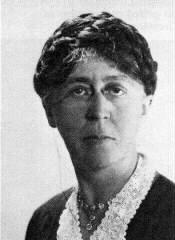
Mary Parker Follett

Mary Parker Follett Quotes

Social Worker

Filter quotes by topic

Famous Mary Parker Follett Quotes

“if you wish to train yourself for higher executive positions, the first thing for you to decide is what you are training for. Ability to dominate or manipulate others? That ought to be easy enough, since most of the magazines advertise sure ways of developing something they call 'personality.' But I am convinced that the first essential of business success is the capacity for organized thinking.”

“We often tend to think that the executive wishes to maintain standard, wishes to reach a certain quality of production, and that the worker has to be goaded in some way to do this. Again and again we forget that the worker is often, usually I think, equally interested, that his greatest pleasure in his work comes from the satisfaction of worthwhile accomplishment, of having done the best of which he was capable.”

“It is always the sign of the second-rate man when the decision merely meets the present situation. It is the left-over in a decision which gives it its greatest value. It is the carry-over in the decision which helps develop the situation in the way we wish it to be developed. The ablest administrators do not merely draw logical conclusions from the array of facts of the past which their expert assistants bring to them; they have a vision of the future.”

“There are three ways of dealing with difference: domination, compromise, and integration. By domination only one side gets what it wants; by compromise neither side gets what it wants; by integration we find a way by which both sides may get what they wish.”

“We have thought of peace as passive and war as the active way of living. The opposite is true. War is not the most strenuous life. It is a kind of rest cure compared to the task of reconciling our differences ... From War to Peace is not from the strenuous to the easy existence; it is from the futile to the effective, from the stagnant to the active, from the destructive to the creative way of life ... The world will be regenerated by the people who rise above these passive ways and heroically seek, by whatever hardship, by whatever toil, the methods by which people can agree.”