Quotessence
Home / Authors / Michael Hudson
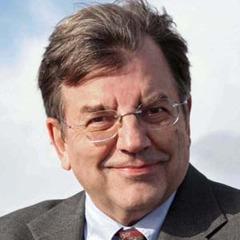
Michael Hudson

Michael Hudson Quotes

Professor

Filter quotes by topic

Famous Michael Hudson Quotes

“When foreign military spending [bombing Korea and Vietnam] forced the U.S. balance of payments into deficit and drove the United States off gold in 1971, central banks were left without the traditional asset used to settle payments imbalances. The alternative by default was to invest their subsequent payments inflows in U.S. Treasury bonds, as if these still were “as good as gold.” Central banks have been holding some $4 trillion of these bonds in their international reserves for the past few years — and these loans have financed most of the U.S. Government’s domestic budget deficits for over three decades. Given the fact that about half of U.S. Government discretionary spending is for military operations — including more than 750 foreign military bases and increasingly expensive operations in the oil-producing and transporting countries — the international financial system is organized in a way that finances the Pentagon, along with U.S. buyouts of foreign assets expected to yield much more than the Treasury bonds that foreign central banks hold.”

“Strange as it may seem — and irrational as it would be in a more logical system of world diplomacy — the dollar glut is what finances America’s global military build-up. It forces foreign central banks to bear the costs of America’s expanding military empire. The result is a new form of taxation without representation. Keeping international reserves in dollars means recycling dollar inflows to buy U.S. Treasury bills — U.S. government debt issued largely to finance the military spending that has been a driving force in the U.S. balance-of-payments deficit since the Korean War broke out in 1950. [...] “China National Offshore Oil Corporation go home” is the motto when foreign governments try to use their sovereign wealth funds (central bank departments trying to figure out what to do with their dollar glut) to make direct investments in American industry, as happened when China’s national oil company sought to buy Unocal in 2005.[...] So Europeans and Asians see U.S. companies pumping more dollars into their economies not only to buy their exports (in excess of providing them with goods and services in return), not only to buy their companies and commanding heights of privatized public enterprises (without giving them reciprocal rights to buy important U.S. companies), and not only to buy foreign stocks, bonds and real estate. The U.S. media neglect to mention that the U.S. Government spends hundreds of billions of dollars abroad — not only in the Near East for direct combat, but to build military bases to encircle the rest of the world, and to install radar systems, guided missile systems and other forms of military coercion, including the “color revolutions” that have been funded all around the former Soviet Union.”

“In contrast to Ricardo’s expectation that banking would retain its early focus on international commerce — and hence,on industrial capital formation to provide foreign markets with British exports in exchange for raw materials — banking has found real estate to be the key, along with its traditional market in creating monopolies and trusts. Some 80% of bank loans in the United States and Britain are mortgages, and consequently they account for 70% of the economy’s interest payments.”

“The motivation for taking on debt is to buy assets or claims rising in price. Over the past half-century the aim of financial investment has been less to earn profits on tangible capital investment than to generate “capital” gains (most of which take the form of debt-leveraged land prices, not industrial capital). Annual price gains for property, stocks and bonds far outstrip the reported real estate rents, corporate profits and disposable personal income after paying for essential non-discretionary spending, headed by FIRE [Finance, Insurance, Real Estate]-sector charges.”

“The United States thus achieved what no earlier imperial system had put in place: a flexible form of global exploitation that controlled debtor countries by imposing the Washington Consensus via the IMF and World Bank, while the Treasury bill standard obliged the payments-surplus nations of Europe and East Asia to extend forced loans to the U.S. Government. Against dollar-deficit regions the United States continued to apply the classical economic leverage that Europe and Japan were not able to use against it. Debtor economies were forced to impose economic austerity to block their own industrialization and agricultural modernization. Their designated role was to export raw materials and provide low-priced labor whose wages were denominated in depreciating currencies. Against dollar-surplus nations the United States was learning to apply a new, unprecedented form of coercion. It dared the rest of the world to call its bluff and plunge the international economy into monetary crisis. That is what would have happened if creditor nations had not channeled their surplus savings to the United States by buying its Government securities.”

“This unique ability of the U.S. Government to borrow from foreign central banks rather than from its own citizens is one of the economic miracles of modern times. Without it the war-induced American prosperity of the 1960s and early 1970s would have ended quickly, as was threatened in 1973 when foreign central banks decided to cut their currencies loose from the dollar, letting them float upward rather than accepting a further flood of U.S. Treasury IOUs.”

“The book received a wider review in the business press than in academic journals. A few weeks after the U.S. publication I was invited to address the annual meeting of Drexel-Burnham to outline how the new Treasury bill standard of world finance had replaced the gold exchange standard. Herman Kahn was the meeting’s other invited speaker. When I had finished, he got up and said, “You’ve shown how the United States has run rings around Britain and every other empire-building nation in history. We’ve pulled off the greatest rip-off ever achieved.” He hired me on the spot to join him as the Hudson Institute’s economist. I was happy enough to leave my professorship in international economics at the New School for Social Research. My professional background had been on Wall Street as balance-of-payments economist for the Chase Manhattan Bank and Arthur Andersen. My research along these lines was too political to fit comfortably into the academic economics curriculum, but at the Hudson Institute I set to work tracing how America was turning its payments deficit into an unprecedented element of strength rather than weakness.”

“Private investors traditionally had been obliged to take losses when debtors defaulted, but it became apparent that the U.S. Government was not about to relinquish its creditor hold on the Allies. This intransigence obliged them to keep tightening the screws on Germany.”

“But instead of U.S. citizens and companies being taxed or U.S. capital markets being obliged to finance the rising federal deficit, foreign economies were obliged to buy the new Treasury bonds being issued. America’s Cold War spending thus became a tax on foreigners. It was their central banks who financed the costs of the war in Southeast Asia.”

“These rules meant that, unlike Britain, the United States was able to pursue its Cold War spending in Asia and elsewhere in the world without constraint, as well as social welfare spending at home. This was just the reverse of Britain’s stop–go policies or the austerity programs that the IMF imposed on Third World debtors when their balance of payments fell into deficit.”

“But money doesn’t work in the sense that labor or tangible capital expends effort to produce commodities. Credit is debt, and debt extracts interest. Financial salesmen who promise investors, “Make your money work for you” actually mean that society should work for the creditors — and that means for the banks that create credit. The effect is to turn the economic surplus into a flow of interest payments, diverting revenue from tangible capital investment. As the economy’s reproductive powers are dried up, the financialization process is kept going by easing credit terms and lending — not to produce more goods and services, but to bid up prices for the real estate, stocks and bonds being pledged as collateral for larger and larger loans.”

“When other countries run sustained trade deficits, they must finance these by selling off domestic assets or running into debt — debt which they actually are obliged to pay. It seems that only the Americans are so bold as to say “Screw the world. We’re going to do whatever we want.” Other countries simply cannot afford the chaos from which the U.S. economy is positioned to withstand as a result of the fact that foreign trade plays a smaller role in its economy than in those of nearly all other nations in today’s interdependent world. Using debtor leverage to set the terms on which it will refrain from causing monetary chaos, America has turned seeming financial weakness into strength. U.S. Government debt has reached so large a magnitude that any attempt to replace it will entail an interregnum of financial chaos and political instability. American diplomats have learned that they are well positioned to come out on top in such grab-bags.”

“These acts recall the 1971–72 “Chicken War” between America and Europe, and the grain embargo that quadrupled wheat prices outside of the United States. It was this embargo that inspired OPEC to enact matching increases in oil prices to maintain terms-of-trade parity between oil and foodstuffs. The “oil shock” was simply a reverberation of the U.S. grain shock.”

“The United States is in deficit on raw materials account, but is unwilling to limit its industrial expansion correspondingly. It is in surplus on farm products account, but is unwilling to limit its agriculture accordingly. The peoples of developing countries therefore are to be turned into the instrument through which the otherwise untenable U.S. economic process is perpetuated.”

“The easy kind of liberalism, with its hope for ready-to-hand technocratic solutions to social problems, has led them to support the major way in which liberal institutions among backward peoples can be prevented from evolving. Their support for higher living standards for all has been exploited into de facto support of the oppressive and militarist regimes in backward countries. That indeed has become the purpose of the Malthusianism promoted by the World Bank and the government of the United States. American liberals have been its unwitting allies, and thereby the allies of the world’s most reactionary regimes.”

“Mathiness: British economic journalist John Kay defines mathiness as a “use of algebraic symbols and quantitative data to give an appearance of scientific content to ideological preconceptions.” Expressing an idea in mathematical symbols instead of straightforward literary terms helps legitimize it in the minds of many people, thanks to a seeming similarity with natural science. In this respect math is basically a form of numerical rhetoric. “The American economist Paul Romer has recently written of ‘mathiness,’ by analogy with ‘truthiness,’ a term coined by American talk show host Stephen Colbert. Truthiness presents narratives which are not actually true, but consistent with the world view of the person who spins the story. It is exemplified in rightwing fabrications about European health systems – their death panels and forced euthanasia.” Paul Samuelson, for instance, trivialized economics in terms that give the outward appearance of science by being expressed mathematically, even when its assumptions are purely hypothetical (and not all realistic)and there are no quantitative statistics to illustrate its categories.”

“Surprising as it may seem today, classical ideas of creating a free market were to be achieved by “socialist” reforms. Their common aim was to protect populations from having to pay prices that included a non-labor rent or financial tax to pay landlords and natural resource owners, monopolists and bondholders. The vested interests railed against public regulation and taxation along these lines. They opposed public ownership or even the taxation of land, natural monopolies and banking. They wanted to collect rent and interest, not make land, banking and infrastructure monopolies public in character.”

“When the volume of debt has grown as large as national income or GDP, and when it bears an interest rate (typically 5%) above the economy’s rate of growth (typically just 1% to 2%), then all the growth in national income is taken by the creditors.”

“In fact, they are not taught in any university departments: the dynamics of debt, and how the pattern of bank lending inflates land prices, or national income accounting and the rising share absorbed by rent extraction in the Finance, Insurance and Real Estate (FIRE) sector. There was only one way to learn how to analyze these topics: to work for banks. Back in the 1960s there was barely a hint that these trends would become a great financial bubble.”

“Popular morality blames victims for going into debt – not only individuals, but also national governments. The trick in this ideological war is to convince debtors to imagine that general prosperity depends on paying bankers and making bondholders rich – a veritable Stockholm Syndrome in which debtors identify with their financial captors.”

“A false alarm is sounded that government budget deficits will increase consumer prices — with no discussion of how private-sector credit deflates economies. The problem is that credit is debt — and paying debt service to bankers and bondholders (and various grades of loan sharks) leaves less income available to spend on goods and services. So debt deflation is today’s major problem, not inflation.”

“The most serious problems lie in the financial sphere, where the economy's debt overhead has grown more rapidly than the 'real' economy's ability to carry this debt. [...] The essence of the global financial bubble is that savings are diverted to inflate the stock market, bond market and real estate prices rather than to build new factories and employ more labor.”

“So the Bush-Obama administration has taken a fiscal stance diametrically opposed to that of the patron saint of free enterprise. While escalating war in Afghanistan and maintaining over 850 military bases around the world, the administration has run up the national debt that Smith decried. By shifting the tax burden off property and off rent-seeking monopolies - above all, off the financial sector - this policy has raised America's cost of living and doing business, thereby undercutting its competitive power and running up larger and larger foreign debt.”

“There are two definitions of deflation. Most people think of it simply as prices going down. But debt deflation is what happens when people have to spend more and more of their income to carry the debts that they've run up - to pay their mortgage debt, to pay the credit card debt, to pay student loans.”

“Deflation means a slowdown of income growth. Markets shrink, new capital investment and employment also taper off, so wages decline. That is what's happening as deliberate policy in Europe and the United States. Falling or stagnant prices are simply the result of having less income to spend.”

“For many people, the mortgages they took out before 2008 are so high that they would be better off walking away from their houses. That is called "jingle mail," returning the keys to the bank and saying, "You can have the house. I can buy the house next door that's just like this for 20% less, so I'm going to save money and switch." That's what someone like Donald Trump or a real estate investor would do. But the banks are trying to convince the mortgage debtors, the homeowners, not to act in their own self-interest.”

“Everybody would be better off if they could buy housing for only, let's say, a carrying charge of one-quarter of their income. That used to be the case 50 years ago. Buyers had to save up and make a higher down payment, giving them more equity - perhaps 25 or 30 percent. But today, banks are creating enough credit to bid up housing prices again.”

“Now, suppose that a homeowner puts down only 3% of their own money or 3.5% for the FHA. That means if prices go down by only 3%, the house will be in negative equity and it would pay the homeowner just to walk away and say, "The house now is worth less than the mortgage I owe. I think I'm just going to move out and buy a cheaper house." So it's very risky when you have only a 3% or 3.5% equity for the loan. The bank really isn't left with much cushion as collateral.”

“The real estate interests and banks are in a kind of symbiosis. They're the largest-growing part of the economy. This is the sector that backs the political campaigns of senators, presidents and congressmen, and they use this leverage to make sure that their people dominate the Federal Reserve, Treasury and the federal housing agencies.”

“When you say "bank," a bank is a building, a set of computers and chairs and things. The bankers are the people running these banks. They're the chief officers, and they push the loans because they don't care if they go bad. For one thing, they may package these bad loans and sell them off to gullible institutional investors.”