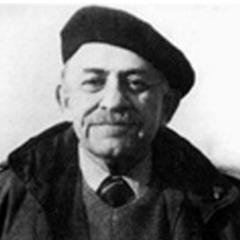
“What solidarity we do find exists despite the society, against all its realities, as an unending struggle between the innate decency of man and the innate indecency of the society. Can we imagine how men would behave if this decency could find full release, if society earned the respect, even the love of the individual?” IfsMenRealityIndividualStruggleImagineActivismDespiteReleaseBehaveSolidarityInnateDecencyUnending Book:The Murray Bookchin Reader Source: The Murray Bookchin Reader
“Nor do piecemeal steps however well intended, even partially resolve problems that have reached a universal, global and catastrophic character. If anything, partial 'solutions' serve merely as cosmetics to conceal the deep seated nature of the ecological crisis. They thereby deflect public attention and theoretical insight from an adequate understanding of the depth and scope of the necessary changes.” IfsWellsCharacterProblemUnderstandingAttentionStepsSolutionsUniversalCrisisDepthInsightResolveAdequateScopeTheoreticalEcologicalCosmeticsDeep SeaEcological CrisisNecessary Change Author:Murray Bookchin
“The real problem is that "limited government" invariably leads to unlimited government. If history is to be any guide and current experience is to be any guide, we in the United States 200 years ago started out with the notion of limited government - virtually no government interference - and we now have a massive quasi-totalitarian government.” IfsYearsRealStatesProblemGovernmentUnitedUnited StatesYears AgoNotionCurrentsGuidesMassiveUnlimitedInterferenceLimited GovernmentReal ProblemsTotalitarian Government Author:Murray Bookchin
“I feel that if people investigate the emergence of government, of State power - if they examine the logic of State power historically, and more specifically in the United States - they will find that the concept of limited government is not tenable once they adopt some type of libertarian principle.” PeopleIfsFeelsStatesGovernmentUnitedPrinciplesUnited StatesTypeConceptsLogicLibertarianLimited GovernmentEmergence Author:Murray Bookchin
“If the State does not enjoy a monopoly of violence, which then gives it the power to order people's lives and to compel them to obey decisions over which they have no control, or just limited control, then I think you have a consistently libertarian society.” PeopleIfsThinkingGivingDoeStatesOrderEnjoyDecisionViolenceLibertarianConsistentlyMonopoly Author:Murray Bookchin
“I say this ironically, not because I favor the State, but because people are not in the state of mind right now where they feel that they can manage themselves. We have to go through an educational process - which does not involve, in my opinion, compromises with the State. But if the State disappeared tomorrow by accident, and the police disappeared and the army disappeared and the government agencies disappeared, the ironical situation is that people would suddenly feel denuded.” PeopleIfsFeelsMindDoeStatesGovernmentProcessSituationOpinionTomorrowRight NowArmyPoliceEducationalAccidentsFavorsManageCompromiseAgencyState Of MindGovernment Agencies Author:Murray Bookchin
“My concern over private property is that it no longer fosters individuality. The historic destiny of private property is that it has created a highly corporatized economy, and I have to ask myself why. What is it in the market that led 100 capitalists to dissolve into 10 as a result of rivalry and accumulation, 10 into 3, and I think if the system has its way, those 3 into 1?” IfsThinkingWayAsksResultsDestinyEconomyConcernPropertyIndividualityCapitalistHistoricAccumulationPrivate PropertyRivalry Author:Murray Bookchin
“If anarcho-communism served to regiment the population in the name of libertarian unity, if it served in any way through collectivist measures to deny the rights of the individual instead of reconciling the rights of the individual with the collective, I would definitely stand completely on the side of the individualist who is trying to rescue above all that most precious thing that makes us human - consciousness and personality.” IfsWayTryingHumansNamesIndividualSidesConsciousnessRightsPersonalityUnityPopulationDenyLibertarianCommunismCollectivesRescueHuman ConsciousnessPrecious Things Author:Murray Bookchin
“I have a great admiration for pacifism, but I'm not a pacifist, mainly because I would defend myself if I were attacked.” IfsAdmirationPacifistPacifism Author:Murray Bookchin
“I believe that the American people should defend themselves if any attempt is made to take over the government by coup d'etat, whether by the military or the Marxists or any people who profess to be anarchists.” PeopleIfsShouldBelieveMadeGovernmentI BelieveMilitaryAnarchistMarxistCoups Author:Murray Bookchin
“I do have an intense respect for pacifists, because I believe that ultimately, if we are to have a truly humanistic as well as libertarian society, violence will have to be banished on this planet.” IfsBelieveWellsI BelieveViolencePlanetsLibertarianIntensePacifistHumanistic Author:Murray Bookchin
“I will not call myself a pacifist for the very simple reason that if something like a [Francisco] Franco should arise in Spain again, or, for that matter, in America, and tried to take away whatever dwindling civil liberties and human rights we retain, I would resist them with a club if I had to. But my admiration for pacifism as an outlook and a sensibility is enormous. I just find that it gets me into contradictions, as it often gets many pacifists into contradictory positions and strategies.” IfsShouldHumansMatterReasonAmericaSimpleLibertyRightsPositionStrategyHuman RightsClubsEnormousAriseContradictionAdmirationSensibilitySpainOutlookContradictoryCivil LibertiesPacifistPacifismFrancoFrancisco Franco Author:Murray Bookchin
“In some instances even certain social services that normally were supplied, or pre-empted by the state. Take the United States, the [Ronald] Reagan administration is withdrawing assistance, all kinds of welfare programs, and if people don't improvise their own resources to cope with problems of the ageing, problems of the sick, problems of the young, problems of the poor, problems of tenant rights, who will?” PeopleIfsKindStatesProblemYoungCertainSocialPoorUnitedUnited StatesRightsResourcesProgramSickAll KindsInstanceAdministrationWelfareAssistanceAgeingSocial ServiceTenantsWithdrawingWelfare Programs Author:Murray Bookchin
“I know one thing: that you can do a lot of things but if you don't educate people into conscious anarchism it gets frittered away.” PeopleIfsKnowsCan DoOne ThingConsciousEducateAnarchism Author:Murray Bookchin
“I've been criticized by many anarchists as believing that anarchism is impossible without affluence. On the contrary, I think affluence is very destructive to anarchism. If you are absorbed by that commodity world then you're not going to move toward any radical positions, you're going to move toward a stance of protectiveness.” IfsThinkingWorldBelieveMovingImpossiblePositionContraryRadicalDestructiveCommodityAnarchismAnarchistStanceAffluenceProtectiveness Author:Murray Bookchin
“I believe that if we do have a commonality of beliefs we should clarify them, we should strengthen their coherence and we should also develop common projects that produce a lived community of relationships.” IfsShouldBelieveBeliefI BelieveCommunityCommonProduceProjectsCoherenceCommonality Author:Murray Bookchin
“If we do not do the impossible, we shall be faced with the unthinkable.” IfsImpossibleSolemnUnthinkablePetra Author:Murray Bookchin
“If we recognise that every ecosystem can also be viewed as a food web, we can think of it as a circular, interlacing nexus of plant animal relationships (rather than a stratified pyramid with man at the apex)… Each species, be it a form of bacteria or deer, is knitted together in a network of interdependence, however indirect the links may be.” IfsThinkingMenMayTogetherFormAnimalPlantSpeciesLinksRecognisePyramidsEcosystemsDeerInterdependenceIndirectBacteriaApexNexus Author:Murray Bookchin
“Power to the people' can only be put into practice when the power exercised by social elites is dissolved into the people. Each individual can then take control of his daily life. If 'Power to the people' means nothing more than power to the 'leaders' of the people, then the people remain an undifferentiated, manipulatable mass, as powerless after the revolution as they were before. In the last analysis, the people can never have power until they disappear as a 'people.” PeopleIfsMeanLastsIndividualSocialLeaderPracticeRevolutionMassDisappearAnalysisDaily LifeElitesPowerlessTake Control Author:Murray Bookchin