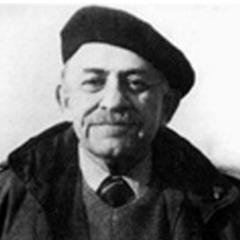
“The State is a professional apparatus that sets itself apart from the people and apart from the institutions that the people themselves create. It's a monopoly on violence that manages and institutionalizes social activities. The people are perfectly capable of managing themselves and creating their own institutions.” PeopleStatesSocialViolenceActivityCreatingCapableInstitutionsManageMonopoly Author:Murray Bookchin
“I find it perfectly consistent for libertarians to operate on the municipal or county level, where they are close to the people and where they may have a party or a federation that is made up of the social institutions, the residual social institutions that still remain, over and beyond what the State has managed to preempt and absorb.” PeopleMayMadeStillsStatesSocialLevelsPartyInstitutionsLibertarianConsistentCountyFederationSocial InstitutionsResidual Author:Murray Bookchin
“I learned that [Trotskyism] were no different from the Stalinists, and they expelled me, which is the typical Marxist-Leninist way of dealing with dissenters. From that point on, I migrated by the 1950s into anarchism, increasingly emphasizing decentralization. Also, I made the all-important step of bridging my social philosophy with ecology. I did that in 1952 and went on to write a whole series of books developing an anarcho-ecological approach.” WayWritingMadeImportantBookDifferentPhilosophyWholeSocialStepsApproachSeriesDevelopingEcologyTypicalAnarchismEcologicalMarxistDecentralization Author:Murray Bookchin
“In some instances even certain social services that normally were supplied, or pre-empted by the state. Take the United States, the [Ronald] Reagan administration is withdrawing assistance, all kinds of welfare programs, and if people don't improvise their own resources to cope with problems of the ageing, problems of the sick, problems of the young, problems of the poor, problems of tenant rights, who will?” PeopleIfsKindStatesProblemYoungCertainSocialPoorUnitedUnited StatesRightsResourcesProgramSickAll KindsInstanceAdministrationWelfareAssistanceAgeingSocial ServiceTenantsWithdrawingWelfare Programs Author:Murray Bookchin
“New York has a tremendous number of people but the quality of its politics is unspeakable. By contrast, in a smaller township, I find there's a great deal of social awareness, less of a sense of powerlessness, less of a polarization of economic life.” PeopleSocialDealsNumbersQualityEconomicAwarenessNew YorkContrastUnspeakablePowerlessnessPolarizationSocial Awareness Author:Murray Bookchin
“I'm much more interested in developing human character in society. And I'm much more interested in the social conditions that foster commitment to ideals, a sense of solidarity, purposefulness, steadfastness, responsibility.” HumansCharacterSocialResponsibilityConditionsCommitmentIdealsDevelopingSolidaritySteadfastnessSocial ConditionsPurposefulness Author:Murray Bookchin
“Humanity has passed through a long history of one-sidedness and of a social condition that has always contained the potential of destruction, despite its creative achievements in technology. The great project of our time must be to open the other eye: to see all-sidedly and wholly, to heal and transcend the cleavage between humanity and nature that came with early wisdom.” LongEyeHumanitySocialVisionTechnologyCreativeSeeingConditionsAchievementProjectsDestructionHistoricalHealDespiteOur TimeAweSocial ConditionsCleavageHumanity And Nature Author:Murray Bookchin
“Until society can be reclaimed by an undivided humanity that will use its collective wisdom, cultural achievements, technological innovations, scientific knowledge, and innate creativity for its own benefit and for that of the natural world, all ecological problems will have their roots in social problems.” WorldUseProblemHumanitySocialNaturalCreativityAchievementBenefitsRootsInnovationCollectivesTechnologicalInnateNatural WorldEcologicalSocial ProblemsScientific KnowledgeCollective Wisdom Book:The Murray Bookchin Reader Source: The Murray Bookchin Reader
“The ecological principle of unity in diversity grades into a richly mediated social principle; hence my use of the term social ecology.” UseSocialTermPrinciplesDiversityUnityGradesEcologyEcologicalUnity In Diversity Book:The Murray Bookchin Reader Source: The Murray Bookchin Reader
“Power to the people' can only be put into practice when the power exercised by social elites is dissolved into the people. Each individual can then take control of his daily life. If 'Power to the people' means nothing more than power to the 'leaders' of the people, then the people remain an undifferentiated, manipulatable mass, as powerless after the revolution as they were before. In the last analysis, the people can never have power until they disappear as a 'people.” PeopleIfsMeanLastsIndividualSocialLeaderPracticeRevolutionMassDisappearAnalysisDaily LifeElitesPowerlessTake Control Author:Murray Bookchin
“In our own time we have seen domination spread over the social landscape to a point where it is beyond all human control. Compared to this stupendous mobilization of materials, of wealth, of human intellect, of human labor for the single goal of domination, all other recent human achievements pale to almost trivial significance. Our art, science, medicine, literature, music and charitable acts seem like mere droppings from a table on which gory feasts on the spoils of conquest have engaged the attention of a system whose appetite for rule is utterly unrestrained.” HumansArtSeemsLiteratureSocialGoalWealthAttentionMaterialsAchievementLaborTablesMedicineMereSpreadIntellectLandscapeEngagedSignificanceAppetitePaleConquestDominationSpoilDroppingCharitableMobilization Author:Murray Bookchin
“Capitalism is a social cancer. It has always been a social cancer. It is the disease of society. It is the malignancy of society.” SocialDiseaseCapitalismCancerMalignancy Author:Murray Bookchin