Quotessence
Home / Authors / Paul Brunton
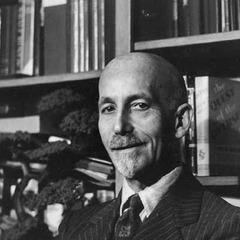
Paul Brunton

Paul Brunton Quotes

Journalist

Filter quotes by topic

Famous Paul Brunton Quotes

“This then is the ultimate truth--that in our inmost nature we are anchored in God, inseparable from God, and that the discovery of this heavenly nature is life's loftiest purpose. Even now, already, today, we are as divine as we ever shall be. The long evolutionary ladder which by prophets and teachers, gurus and guides we are bidden to climb toilsomely and slowly and painfully need not be climbed at all if only we heed this truth continually, if we refuse to let it go, if we make it ours in all parts of our being--in thought, feeling, faith, and action.”

“The deeper he penetrates into this inner being, the more will he feel inclined to keep the development quite secret. It is becoming too holy to be talked about […] There are some inner experiences which seem too holy to be talked about in public, too intimate even to be talked about with intimate friends, too mysterious to be mentioned to anyone else except a student or a teacher who has passed through similar experiences himself.”

“He sees the truth as with a jolt. There it is, within his own being, lying deep down but still in his own self. There never was any need to travel anywhere to find it; no need to visit anyone who was supposed to have it already, and sit at his feet; not even to read any book, however sacred or inspired. Nor could another person, place, or writing give it to him--he would have to unveil it for himself in himself. The others could direct him to look inwards, thus saving all the effort of looking elsewhere. But he himself would have to give the needful attention to himself. The discovery must be his own, made within the still centre of his being.”

“1. Do all meditation work with open eyes, with the Buddhic smile. 2. Keep attention inside on the No-thought state and refrain from unnecessary talk. 3. When residual impressions from the last incarnation come in, ignore them. 4. Kill out the mind. Be free from its activity. Stay in the Void.”

“There comes a stage, whether in meditation or in the ordinary daily experience of life, at which he has to cross over from doing, trying, and managing things by his own self alone and when he can let go and open himself to the higher force--when he can submit his ego to its ordinances, its commands, or to its whispers.”

“Be still, and know that I am God," sings the Biblical Psalmist. This simply means that the movement of thoughts and emotions is to be brought to an end by entering the deepest degree of contemplation. The same teaching is given in the Bhagavad Gita. "As the wick of an oil lamp placed in a wind-free spot is flickerless, so is the yogi of mastered mind who practises union with the God-Self.”

“The practice of extending love towards all living creatures brings on ecstatic states of cosmic joy. In this intently concentrated state he (the meditator) has the power to send beneficent thoughts over land or sea to a distant person and let them penetrate his mind.”

“Experience shows that if a sufficiently deep level--not necessarily the deepest level but one that corresponds to what the yogis call savikalpa samadhi, which is not as deep as nirvikalpa--if that can be attained and then prolonged sufficiently in time, an artist or a writer can draw from the experience creative power for his work.”

“Everything is taken away from him; he is nothing and has nothing; yet he still feels one thing which utterly compensates for this loss. He feels the presence of the Overself [...] In the practice of Indian Yoga, Nirvikalpa Samadhi is considered to be the farthest point to which the practitioner can travel. Nirvikalpa Samadhi is the condition of the emptied mind, without any trace of thought, whether of the world or of the person himself; yet fully aware [...] So many conversations on the words of Jesus have taken his sentence "I and my Father are one" to mean a kind of union like marriage. But they overlook the fact that married couples still remain couples, still express the number two. Jesus did not say, "I and my father are two." The number one is definitely not two. For Jesus found, as every other man who attains that stage of consciousness finds, that when contemplating the Infinite Life-Power (which he named the Father) he himself vanished. There was then no other consciousness except that of the Infinite itself. For That was the substratum of his own "I." But what happened in his contemplation two thousand years ago still happens today; the same discovery is made when the illusion of egoity vanishes.”

“The Surangama Sutra chooses, as the best meditation method for the present historic cycle, the one used by Avalokitesvara. It disengages bodily hearing from outward sound, then penetrates still deeper into the void beyond this duality, then beyond ego and its object, until all opposites and dualities vanish, leaving absoluteness. Nirvana follows as a natural consequence. In other words, disengage consciousness from the senses and return to pure Consciousness itself.”