Quotessence
Home / Authors / Peter Gay Books
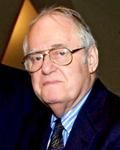
Peter Gay

Peter Gay Books

Professor

Related Quotes

“An experience is an encounter of mind with world, neither of these ever simple or wholly perspicuous. Often commonplace on the surface, experience shows itself, especially when we trace its roots to the remote domains of the unconscious, uncooperative, evasive, taciturn; the creature of ambiguous impulsions and unresolved conflicts, it often sows confusion and compels drastic misreadings. Far more than simply providing occasions for the stereotyped exercise of thoughts and action, experiences participate in creating the object of interest and passion; it gives form to the inchoate wishes and defends against besetting anxieties.”

“The human mind hungers for reality; except for the largely encapsulated id, which is the depository of the raw drives and of deeply repressed material, the other institutions of the mind, the ego and the superego, draw continuously and liberally on the culture in which they subsist, develop, succeed, and fail. While the mind presents the world with its needs, the world gives the mind its grammar, wishes their vocabulary, anxieties their object.”

“The need to live by secure, sharply etched classifications is buried deep in the human mind and one of its earliest demands; simplicity allays anxieties by defeating discriminations. Real situations are rarely clear-cut, real feelings often nests of ambivalence. This is something the adult learns to recognize and to tolerate, if he is fortunate; it is a strenuous insight from which he will regress at the first opportunity. That is why the liberal temper, which taught men to live with uncertainties and ambiguities, the most triumphant achievement of nineteenth-century culture, was so vulnerable to the assaults of cruder views of the world, to bigotry, chauvinism, and other coarse and simplistic classifications. "Every society," wrote Friedrich Nietzsche in one of his most brilliant aphorisms, "has the tendency to degrade and, as it were, to starve out, its adversaries—at least in its perception." The criminal, he thought, was one victim of such a regressive process; so was the Jew. And "among artists, the 'philistine and bourgeois' becomes a caricature." And artists, the avant-gardes, Nietzsche might have added, only set the tone for the wider culture. Class consciousness, which emerged fitfully and then more and more fully and aggressively towards the end of the eighteenth and in the early nineteenth century, enshrined such a caricature: a mixture and social reality and unconscious needs.”

“Freud, Jung thought, had been a great discoverer of facts about the mind, but far too inclined to leave the solid ground of "critical reason and common sense." Freud for his part criticized Jung for being gullible about occult phenomena and infatuated with Oriental religions; he viewed with sardonic and unmitigated skepticism Jung's defense of religious feelings as an integral element in mental health. For Freud, religion was a psychological need projected onto culture, the child's feeling of helplessness surviving in adults, to be analyzed rather than admired.”

“The ideas of theologians are refuted by their adversaries, the ideas of scientists are refuted by their followers.”