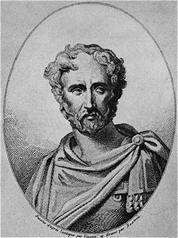
Pliny the Elder was a Roman author, naturalist, and philosopher, renowned for his comprehensive work 'Natural History'. Born in 23 AD, he was a member of the Roman nobility and held various public offices, including military and administrative roles. His encyclopedic work is a cornerstone of classical literature, offering extensive insights into the natural world, including geography, botany, zoology, and human history. Tragically, Pliny the Elder perished in 79 AD during the eruption of Mount Vesuvius.
Related Quotes
Source: Natural History: A Selection
“Cats too, with what silent stealthiness, with what light steps do they creep up to a bird!”
Source: Delphi Complete Works of Pliny the Elder (Illustrated)
Source: Delphi Complete Works of Pliny the Elder (Illustrated)
“Let not things, because they are common, enjoy for that the less share of our consideration.”
Source: Delphi Complete Works of Pliny the Elder (Illustrated)
“How many things... are looked upon as quite impossible until they have been actually effected?”
Source: Natural History: An Account by a Roman of what Romans Knew and Did and Valued
Source: Delphi Complete Works of Pliny the Elder (Illustrated)
Source: Delphi Complete Works of Pliny the Elder (Illustrated)
Source: Delphi Complete Works of Pliny the Elder (Illustrated)
Source: Delphi Complete Works of Pliny the Elder (Illustrated)
Source: Delphi Complete Works of Pliny the Elder (Illustrated)
Source: Delphi Complete Works of Pliny the Elder (Illustrated)
“Always act in such a way as to secure the love of your neighbour.”
Source: Delphi Complete Works of Pliny the Elder (Illustrated)
Source: The Natural History of Pliny
“Why is it that we entertain the belief that for every purpose odd numbers are the most effectual?”
Source: Delphi Complete Works of Pliny the Elder (Illustrated)
Source: Delphi Complete Works of Pliny the Elder (Illustrated)
“Most men are afraid of a bad name, but few fear their consciences.”
“Let that which is wanting in income be supplied by economy.”
“The desire to know a thing is heightened by its gratification being deferred.”
“We listen with deep interest to what we hear, for to man novelty is ever charming.”