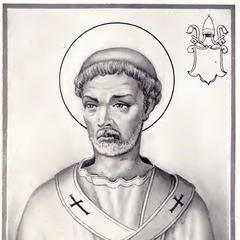
“Those who do not know must be taught, not punished. We do not hit the blind. We lead them by the hand.” KnowsHandsChristianTaughtBlindOrthodoxOrthodox Christian Author:Pope Dionysius
“All angels bring revelations and tidings of their superiors. The first bring word of God who is their inspiration, while the others, according to where they are, tell of those inspired by God... the holiest of the seraphim 'cry out to one another' (Is. 6:3)... this shows that the first ranks pass on to the second what they know of God.” KnowsFirstsShowsInspirationChristianCryAngelInspiredSuperiorsRevelationsOrthodoxWord Of GodOrthodox ChristianTidings Author:Pope Dionysius
“...if we know God our knowledge of... everything will be brought to perfection, and, in so far as is possible, the infinite, divine and ineffable dwelling place (cf. Jn. 14:2) will be ours to enjoy. For this is what our sainted teacher said in his famous philosophical aphorism: 'Then we shall know as we are known' (I Cor. 13:12), when we mingle our god-formed mind and divine reason to what is properly its own and the image returns to the archetype for which it now longs.” IfsKnowsMindSaidReasonChristianEnjoyKnownTeacherDivineReturnPerfectionPhilosophicalInfiniteOrthodoxAphorismKnowing GodDwellingOrthodox ChristianArchetypeCfsIneffableDwelling Place Author:Pope Dionysius
“The name 'cherubim' means 'fullness of knowledge' or 'outpouring of wisdom'... The name cherubim signifies the power to know and to see God, to receive the greatest gifts of His light, to contemplate the divine splendor in primordial power, to be filled with the gifts that bring wisdom and to share these generously with subordinates as a part of the beneficent outpouring of His wisdom.” KnowsMeanLightChristianNamesShareDivineFilledOrthodoxContemplatingFullnessOrthodox ChristianGreatest GiftsSplendorSubordinates Author:Pope Dionysius
“I pray we... come to this darkness so far above light! If only we lacked sight and knowledge so as to see, so as to know, unseeing and unknowing, that which lies beyond all vision and knowledge. For this would be really to see and to know: to praise the Transcendent One in a transcending way... We would be like sculptors who set out to carve a statue. They remove every obstacle to the pure view of the hidden image, and simply by the act of clearing aside they show up the beauty which is hidden.” IfsKnowsWayShowsLightWould BeChristianLyingViewsVisionDarknessPrayingPureSightPraiseObstaclesRemoveOrthodoxStatuesI PrayOrthodox ChristianTranscendentSculptorsClearingTranscendingUnknowing Author:Pope Dionysius
“...God does not possess a private knowledge of Himself and a separate knowledge of all the creatures in common. The universal Cause, by knowing Itself, can hardly be ignorant of the things which proceed from It and of which It is the source. This, then, is how God knows all things, not by understanding things, but by understanding Himself.” KnowsDoeChristianCausesUnderstandingCommonKnowingSourceCreaturesAll ThingsUniversalIgnorantOrthodoxGod KnowsUnderstanding Things Author:Pope Dionysius