Quotessence
Home / Authors / Ralph Metzner
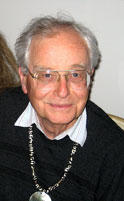
Ralph Metzner

Ralph Metzner Quotes

Psychologist

Filter quotes by topic

Famous Ralph Metzner Quotes

“Wars between people cannot be reduced or eliminated as long as the war with nature proceeds quite unconsciously. Both situations of war may ultimately be seen as externalizations of the conflicts and wars within human consciousness. If this is so, then our task becomes one of recognizing and confronting the 'inner enemy,' the inner antagonist. We need to recognize and withdraw the projections of this inner enemy onto external agents or forces—whether this be other human beings or the world of wild nature.”

“We were mothered out of the substance of this planet. Her elements, her periodicities, her gravitational embrace, her subtle vibrations still mingle in our nature, worked a billion years down into the textures of life and mind. Logically, the individual human being is a living organic system that exists as part of the larger living organic system that we call the biosphere, or Earth.”

“I noted that I was feeling a profound affection and admiration toward these people, whom I don't know and can't even understand. I also felt affection emanating from them toward me and toward each other. Those not participating in the ceremony were also included in this empathic web, as were the creatures and plants of the forest all around us—indeed, the whole world of sky and earth, rain and sunlight, wind and rocks, and trees. It seemed that by not understanding the words being said, I could concentrate totally on the waves of positive feeling that were washing through the group.”

“I found that visual and auditory imagery of the elements in nature consistently induced in people's experience the qualities of consciousness associated with the elements in the alchemical and other earth-based traditions: Images and sounds of air and winds, of clouds and winged creatures, triggered associations of the mental realm, the expansive and swiftly changing world of thoughts and ideas, of words and poems and songs. Images and sounds of the water element, of oceans, tides, sea creatures, waves, rivers, springs, lakes, and rain, often released powerful emotions and feeling memories, both positive and negative. Images and sounds of fire energy, such as the sun, lightning, volcanoes, and electrical fields, were associated in people's experience with creativity, imagination, enthusiasm, vision, and intuition. Images and sounds of the earth element, of rocks and mountains, land and forest, plants and minerals, induced associations of kinesthetic and somatic awareness, of sensory contact and pleasure, of solid and substantive form.”

“After the stormy disruption of the elements, there comes a great peace. The elements then shine with a wonderful clarity, fire has no searing heat, air is free of dense clouds, water does not rage and flood, and the earth is not fragile and crumbling. Sun, moon, and stars sparkle in brilliant illumination and beauty; they stand still, so that there is no night, but only day. Since the body, as well as the psyche, is composed of the elements, there is great healing as the scattered and bruised fragments of our being are brought together again, in wholeness. The fiery aspect of our nature glows golden like the dawn; the air of our mind is clear and shining; the water currents of our body and the emotional currents of our psyche become transparent and still; the earthy part of our nature, our flesh and bones, becomes strong and well-proportioned. Here is revealed a vision of the total transformation possible for the human being—a psycho-alchemical transmutation of the elements from a state of disorder and conflict to a state of harmony and balance.”

“The fundamental reality of the universe is a continuum, a unitive field or fabric of energy and consciousness that goes beyond time, space, and all forms and yet lies within them. In traditional Asian religions, this unitive field is variously referred to as Tao or Brahman. Some Native North Americans refer to it as Wakan-Tanka, the all-pervading Creator Spirit. The pre-Christian Anglo-Saxons of the British Isles called it the Wyrd. In the systems language of postmodern science, it is seen as an infinitely complex system of interrelationships or a 'web of life.”

“Once we recognize our inescapable embeddedness in the living, organic ecosystem and our mutual interdependence with all other coexisting species, our sense of separate identity, so strenuously acquired and desperately maintained, recedes more into the background. Instead, the relationships, whether balanced or imbalanced, take the foreground and become the focus of concern. This is the perceptual basis for a new and ancient point of view: it is holistic and inclusive and inevitably accompanied by a sense of wonder and reverence.”