Quotessence
Home / Authors / Richard Hofstadter
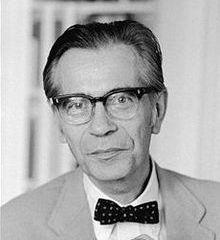
Richard Hofstadter

Richard Hofstadter Quotes

Historian

Filter quotes by topic

Famous Richard Hofstadter Quotes

“If mind is seen not as a threat but as a guide to emotion, if intellect is seen neither as a guarantee of character nor as an inevitable danger to it, if theory is conceived as something serviceable but not necessarily subordinate or inferior to practice, and if our democratic aspirations are defined in such realistic and defensible terms as to admit of excellence, all these supposed antagonisms lose their force.”

“Ideally, the pursuit of truth is said to be at the heart of the intellectual's business, but this credits his business too much and not quite enough. As with the pursuit of happiness, the pursuit of truth is itself gratifying whereas consummation often turns out to be elusive. Truth captured loses its glamour; truths long known and widely believed have a way of turning false with time; easy truths are bore and too many of them become half truths. Whatever the intellectual is too certain of, if he is healthily playful, he begins to find unsatisfactory. The meaning of his intellectual life lies not in the possession of truth but in the quest for new uncertainties. Harold Rosenberg summed up this side of the life of the mind supremely well when he said that the intellectual is one who turns answers into questions.”

“The older America, until the 1890s and in some respects until 1914, was wrapped in the security of continental isolation, village society, the Protestant denominations, and a flourishing industrial capitalism. But reluctantly, year by year, over several decades, it has been drawn into the twentieth century and forced to cope with its unpleasant realities: first the incursions of cosmopolitanism and skepticism, then the disappearance of American isolation and easy military security, the collapse of traditional capitalism and its supplementation by a centralized welfare state, finally the unrelenting costs and stringencies of the Second World War, the Korean War, and the cold war. As a consequence, the heartland of America, filled with people who are often fundamentalist in religion, nativist in prejudice, isolationist in foreign policy, and conservative in economics, has constantly rumbled with an underground revolt against all these tormenting manifestations of our modern predicament.”

“Anti-intellectualism ... has been present in some form and degree in most societies; in one it takes the form of the administering of hemlock, in another of town-and-gown riots, in another of censorship and regimentation, in still another of Congressional investigations.”