Quotessence
Home / Authors / Richard Hofstadter Books
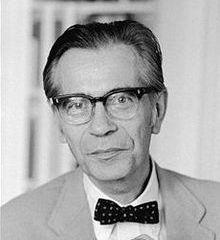
Richard Hofstadter

Richard Hofstadter Books

Historian

Related Quotes

“If mind is seen not as a threat but as a guide to emotion, if intellect is seen neither as a guarantee of character nor as an inevitable danger to it, if theory is conceived as something serviceable but not necessarily subordinate or inferior to practice, and if our democratic aspirations are defined in such realistic and defensible terms as to admit of excellence, all these supposed antagonisms lose their force.”

“Ideally, the pursuit of truth is said to be at the heart of the intellectual's business, but this credits his business too much and not quite enough. As with the pursuit of happiness, the pursuit of truth is itself gratifying whereas consummation often turns out to be elusive. Truth captured loses its glamour; truths long known and widely believed have a way of turning false with time; easy truths are bore and too many of them become half truths. Whatever the intellectual is too certain of, if he is healthily playful, he begins to find unsatisfactory. The meaning of his intellectual life lies not in the possession of truth but in the quest for new uncertainties. Harold Rosenberg summed up this side of the life of the mind supremely well when he said that the intellectual is one who turns answers into questions.”

“Major parties have lived more for patronage than for principles; their goal has been to bind together a sufficiently large coalition of diverse interests to get into power; and once in power, to arrange sufficiently satisfactory compromises of interests to remain there.”

“The first truly powerful and widespread impulse to anti-intellectualism in American politics was, in fact, given by the Jacksonian movement. Its distrust of expertise, its dislike for centralization, its desire to uproot the entrenched classes, and its doctrine that important functions were simple enough to be performed by anyone, amounted to a repudiation non only of the system of government by gentlemen which the nation had inherited from the eighteenth century, but also of the special value of the educated classes in civic life.”

“Finally, the work of the minister tended to be judged by his success in a single area - the saving of souls in measurable numbers. The local minister was judged either by his charismatic powers or by his ability to prepare his congregation for the preaching of some itinerant ministerial charmer who would really awaken its members. The 'star' system prevailed in religion before it reached the theater. As the evangelical impulse became more widespread and more dominant, the selection and training of ministers was increasingly shaped by the revivalist criterion of ministerial merit. The Puritan ideal of the minister as an intellectual and educational leader was steadily weakened in the face of the evangelical ideal of the minister as a popular crusader and exhorter. Theological education itself became more instrumental. Simple dogmatic formulations were considered sufficient. In considerable measure the churches withdrew from intellectual encounters with the secular world, gave up the idea that religion is a part of the whole life of intellectual experience, and often abandoned the field of rational studies on the assumption that they were the natural province of science alone. By 1853 an outstanding clergyman complained that there was 'an impression, somewhat general, that an intellectual clergyman is deficient in piety, and that an eminently pious minister is deficient in intellect.”

“The older America, until the 1890s and in some respects until 1914, was wrapped in the security of continental isolation, village society, the Protestant denominations, and a flourishing industrial capitalism. But reluctantly, year by year, over several decades, it has been drawn into the twentieth century and forced to cope with its unpleasant realities: first the incursions of cosmopolitanism and skepticism, then the disappearance of American isolation and easy military security, the collapse of traditional capitalism and its supplementation by a centralized welfare state, finally the unrelenting costs and stringencies of the Second World War, the Korean War, and the cold war. As a consequence, the heartland of America, filled with people who are often fundamentalist in religion, nativist in prejudice, isolationist in foreign policy, and conservative in economics, has constantly rumbled with an underground revolt against all these tormenting manifestations of our modern predicament.”

“The American farmer, whose holdings were not so extensive as those of the grandee nor so tiny as those of the peasant, whose psychology was Protestant and bourgeois, and whose politics were petty-capitalist rather than traditionalist, had no reason to share the social outlook of the rural classes of Europe. In Europe land was limited and dear, while labor was abundant and relatively cheap; in America the ratio between land and labor was inverted.”

“Arthur Schlesinger, Jr., in a mordant protest written soon after the [1952] election, found the intellectual "in a situation he has not known for a generation." After twenty years of Democratic rule, during which the intellectual had been in the main understood and respected, business had come back into power, bringing with it "the vulgarization which has been the almost invariable consequence of business supremacy.”

“Anti-intellectualism ... has been present in some form and degree in most societies; in one it takes the form of the administering of hemlock, in another of town-and-gown riots, in another of censorship and regimentation, in still another of Congressional investigations.”

“It is the historic glory of the intellectual class of the West in modern times that, of all the classes which could be called in any sense privileged, it has shown the largest and most consistent concern for the well-being of the classes which lie below it in the social scale.”

“The intellectual ... may live for ideas, as I have said, but something must prevent him from living for one idea, from becoming obsessive or grotesque. Although there have been zealots whom we may still regard as intellectuals, zealotry is a defect of the breed and not of the essence.”

“In using the terms play and playfulness, I do not intend to suggest any lack of seriousness; quite the contrary. Anyone who has watched children, or adults, at play will recognize that there is no contradiction between play and seriousness, and that some forms of play induce a measure of grave concentration not so readily called forth by work.”

“The intellectual's ... playfulness, in its various manifestations, is likely to seem to most men a perverse luxury; in the United States the play of the mind is perhaps the only form of play that is not looked upon with the most tender indulgence. His piety is likely to seem nettlesome, if not actually dangerous. And neither quality is considered to contribute very much to the practical business of life.”

“If for every error and every act of incompetence one can substitute an act of treason, many points of fascinating interpretation are open to the paranoid imagination.”

“The idea of the paranoid style as a force in politics would have little contemporary relevance or historical value if it were applied only to men with profoundly disturbed minds. It is the use of paranoid modes of expression by more or less normal people that makes the phenomenon significant.”