Quotessence
Home / Authors / Robert Jackson Bennett
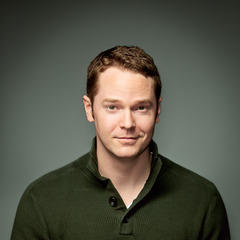
Robert Jackson Bennett

Robert Jackson Bennett Quotes

Writer

Filter quotes by topic

Famous Robert Jackson Bennett Quotes

“Die. Do you think I will? I suppose I must...I exist now, and everything that exists must end, one day. I wonder how I will die, and what it will be like. It will be most interesting, don't you think? [...] Yes. Yes, I think it will," said the wolf. "I look forward to it. On the whole, I think it is a very strange and terrifying thing, to exist. I really don't understand how you do it. Tell me - how do you deal with the fear? "The fear?" asked George. "Yes. That fear that comes from the feeling that there is you, and then there is...everything else. That you are trapped inside of yourself, a tiny dot insignificant in the face of every everything that could ever be. How do you manage that?" George considered how to answer. "I...guess we just never think about it." "Never think about it!" cried the wolf. "How can you not think about it when it confronts you at every moment? You are lost amid a wide, dark sea, with no shores in sight, and you all so rarely panic! Some days I can barely function, so how on earth can you never think about it?" "Well, I...suppose we distract ourselves," said George. "But with what?". "I don't know. With all kinds of things.”

“Sometimes I can’t tell if you hate this place or love it.” “I love its potential. I hate its past. And I don’t like what it is.” She hugs her knees close to her chest. “The way you feel about the place you grew up in is a lot like how you feel about your family.” “How’s that?” She thinks about it for a long time. “Like isn’t the same thing as love.”

“I pinned my hair back, took another sip of sotwine, and went to work. I moved throughout the crowd in slow, familiar steps as I went about my dance: waiting for the right look, the proper fleeting glance, before approaching with a small smile; then, my eyes fluttering, I’d recall the best greeting, the best clever comment; or the right movements, or the right positioning; or when to look them in the eye, or look away; or when to let my hair fall in my face, and when to pin it back again. To others, the dance might have seemed artful, yet to me, it was routine. I had memorized this method over the past year as I’d moved from place to place: much like picking a lock, some combination of these gestures and exchanges worked to win the right attentions.”

“Yet I now ask of you—are you marauders or are you servants? Do you give power to others, or do you hoard it? Do you fight not to have something, but rather fight so that others might one day have something? Is your blade a part of your soul, or is it a burden, a tool, to be used with care? Are you soldiers, my children, or are you savages?”

“Shara was already an avid reader by then, but she had never realized until that moment what books meant, the possibility they presented: you could protect them forever, store them up like engineers store water, endless resources of time and knowledge snared in ink, tied down to paper, layered on shelves.... Moments made physical, untouchable, perfect, like preserving a dead hornet in crystal, one drop of venom forever hanging from its stinger. She felt overwhelmed. It was--she briefly thinks of herself and Vo, reading together in the library--a lot like being in love for the first time.”

“She looked out at the city. All of Tevanne was smeared with starlit smoke and steam, a ghostly cityscape sinking into the fog. The huge white campo walls surfaced among the ramble of the Commons like the bones ofa bleached whale. Behind them stood the towers of the campos, which glowed with soft, colorful luminescence. Among them was the Michiel clock tower, its face a bright, cheery pink, and beyond that was the Mountain of the Candianos, the biggest structure in all of Tevanne, a huge dome that reminded her of a fat, swollen tick, sitting in the center of the Candiano campo. She felt lonely, and small. Sancia had always been alone. But feeling lonely was different from just being alone.”

“I wonder, sometimes, if the Continentals were like shoals of fish, & the slightest flick of one fish caused dozens of others to follow suit, until the entire shimmering cloud had changed course. And were the Divinities the sum of this cloud? An embodiment, perhaps, of a national subconscious? Or were they empowered by the thoughts & praises of millions of people, yet also yoked to every one of those thoughts – giant, terrible puppets forced to dance by the strings of millions of puppeteers. This knowledge, I think, is incredibly dangerous. The Continentals derive so much pride & so much power from having Divine approval … but were they merely hearing the echoes of their own voices, magnified through strange caverns & tunnels? When they spoke to the Divinities, were they speaking to giant reflections of themselves?”

“And Olvos said to them: “Why have you done this, my children? Why is the sky wreathed with smoke? Why have you made war in far places, and shed blood in strange lands? And they said to Her: “You blessed us as Your people, and we rejoiced, and were happy. But we found those who were not Your people, and they would not become Your people, and they were willful and ignorant of You. They would not open their ears to Your songs, or lay Your words upon their tongues. So we dashed them upon the rocks and threw down their houses and shed their blood and scattered them to the winds, and we were right to do so. For we are Your people. We carry Your blessings. We are Yours, and so we are right. Is this not what You said?” And Olvos was silent.”