Quotessence
Home / Authors / Robert M. Sapolsky
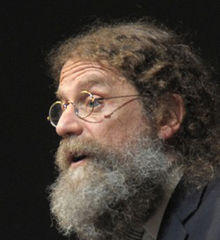
Robert M. Sapolsky

Robert M. Sapolsky Quotes

Neuroendocrinologist

Filter quotes by topic

Famous Robert M. Sapolsky Quotes

“We judge ourselves by our internal motives and everyone else by their external actions. And thus, in considering our own misdeeds, we have more access to mitigating situational information. This is straight out of Us Them. When Thems do something wrong, it's because they're simply rotten. When Us-es do it, it's because of an extenuating circumstance and Me is the most focal Us there is, coming with the most insight into internal state. Thus on this cognitive level, there is no inconsistency or hypocrisy and we might readily perceive a wrong to be mitigated by internal motives in the case of anyone's misdeeds. It's just easier to know those motives when we are the perpetrator. The adverse consequences of this are wide and deep. Moreover, the pull towards judging yourself less harshly than others easily resists the rationality of deterrence. As Ariely writes in his book, 'Overall, cheating is not limited by risk; it is limited by our ability to rationalize the cheating to ourselves.”

“Anthropologists, studying everyone from hunter-gatherers to urbanites, have found that about two thirds of everyday conversation is gossip, with the vast majority of it being negative. As has been said, gossip (with the goal of shaming) is a weapon of the weak against the powerful. It has always been fast and cheap and is infinitely more so now in the era of the Scarlet Internet.”

“Say I decide that it would be a good thing to insert pictures here demonstrating cultural relativism, displaying an act that is commonsensical in one culture but deeply distressing in another. I know, I think, I'll get some pictures of a Southeast Asian dog meat market. Like me, most readers will likely resonate with dogs. Good plan! On to Google Images and the result is that I spend hours transfixed, unable to stop, torturing myself with picture after picture of dogs being carted off to market. Dogs being butchered, cooked and sold. Pictures of humans going about their day's work in a market indifferent to a crate stuffed to the top with suffering dogs. I imagine the fear those dogs feel. How they are hot, thirsty, in pain. I think, what if these dogs had come to trust humans? I think of their fear and confusion. I think, what if one of the dogs whom I've loved had to experience that? What if this happened to a dog my children loved? And with my heart racing, I realize that I hate these people. Hate! Every last one of them and despise their culture. And it takes a locomotive's worth of effort for me to admit that I can't justify that hatred and contempt. That mine is a mere moral intuition. That there are things that I do that would evoke the same response in some distant person whose morality and humanity are certainly no less than mine. And that but for the randomness of where I happen to have been born, I could have readily had their views instead. The thing that makes the tragedy of commonsense morality so tragic, is the intensity with which you just know that They are deeply wrong. In general, our morally tinged cultural institutions, religion, nationalism, ethnic pride, team spirit, bias us toward our best behaviors when we are single shepherds, facing a potential tragedy of the commons. They make us less selfish in Me versus Us situations, but they send us hurtling toward our worst behaviors when confronting Thems and their different moralities.”