Quotessence
Home / Authors / Robert Walser
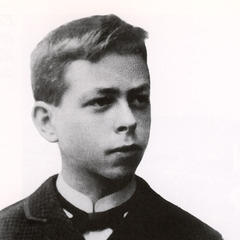
Robert Walser

Robert Walser Quotes

Writer

Filter quotes by topic

Famous Robert Walser Quotes

“How reprehensible it is when those blessed with commodities insist on ignoring the poor. Better to torment them, force them into indentured servitude, inflict compulsion and blows—this at least produces a connection, fury and a pounding heart, and these too constitute a form of relationship. But to cower in elegant homes behind golden garden gates, fearful lest the breath of warm humankind touch you, unable to indulge in extravagances for fear they might be glimpsed by the embittered oppressed, to oppress and yet lack the courage to show yourself as an oppressor, even to fear the ones you are oppressing, feeling ill at ease in your own wealth and begrudging others their ease, to resort to disagreeable weapons that require neither true audacity nor manly courage, to have money, but only money, without splendor: That’s what things look like in our cities at present”

“I must find myself a life, a new life, even if all of life consists only of an endless search for life. What is respect compared to this other thing: being happy and having satisfied the heart’s pride. Even being unhappy is better than being respected. I am unhappy despite the respect I enjoy; and so in my own eyes I don’t deserve this respect; for I consider only happiness worthy of respect. Therefore I must try whether it is possible to be happy without insisting on respect.”

“Ah, I believe Schacht. Only too willingly; that’s to say, I think what he says is absolutely true, for the world is incomprehensibly crass, tyrannical, moody, and cruel to sickly and sensitive people. Well, Schacht will stay here for the time being. We laughed at him a bit, when he arrived, that can’t be helped either, Schacht is young and after all can’t be allowed to think there are special degrees, advantages, methods, and considerations for him. He has now had his first disappointment, and I’m convinced that he’ll have twenty disappointments, one after the other. Life with its savage laws is in any case for certain people a succession of discouragements and terrifying bad impressions. People like Schacht are born to feel and suffer a continuous sense of aversion. He would like to admit and welcome things, but he just can’t. Hardness and lack of compassion strike him with tenfold force, he just feels them more acutely. Poor Schacht. He’s a child and he should be able to revel in melodies and bed himself in kind, soft, carefree things. For him there should be secret splashings and birdsong. Pale and delicate evening clouds should waft him away in the kingdom of Ah, What’s Happening to Me? His hands are made for light gestures, not for work. Before him breezes should blow, and behind him sweet, friendly voices should be whispering. His eyes should be allowed to remain blissfully closed, and Schacht should be allowed to go quietly to sleep again, after being wakened in the morning in the warm, sensuous cushions. For him there is, at root, no proper activity, for every activity is for him, the way he is, improper, unnatural, and unsuitable. Compared with Schacht I’m the trueblue rawboned laborer. Ah, he’ll be crushed, and one day he’ll die in a hospital. or he’ll perish, ruined in body and soul, inside one of our modern prisons.”

“My cheeks are red hot, my lip still trembles, because I sent my heart to speak; every word of it delusional and awkward, an exuberance, an abrupt sound. That's how I spoke, oh, it still shows on my hot cheeks I'm now carrying home. I look down at the snow and walk past many houses, past many hedges, many trees, the snow adorns hedge, tree and house. I walk on, staring down at the snow, on my cheeks nothing but red-hot memory reminding me of my wild talk.”

“After a spent day, I walked back in a fever. The whole way home the sun touched my cheeks. The blissful evening glow spread across the meadows and I called this light the blood I shed. My hot burning blood lay consoling the entire world. So I walked with pride-- Now that all was tilled. I didn't know what was happening, I leaned against a fence post, in my blood that covered the meadows near and far.”

“You do see me crossing the meadow stiff and dead from the mist? I long for that home, that home I've never had, and without any hope that I'll ever be able to reach it. For such a home, never touched, I carry that longing that will never die, like that meadow dies stiff and dead from the mist. You do see me crossing it, full of dread?”

“They should not clench their fists, it’s my longing that’s drawing me near to them; they should not stand there full of rage, my longing is timidly drawing near to them; they should not be ready to pounce like vicious dogs, as if they wanted to tear my longing to shreds; they should not threaten with broad sleeves, that pains my longing. Why have they suddenly changed? As great and deep is my longing. No matter how difficult, no matter how menacing: I must reach them and I’m already there.”

“On a far-wandering walk a thousand useful and usable thoughts occur to me, while shut in at home, I would lamentably wither and dry up. Walking is for me not only healthy, and lovely, it is also of service - not only lovely, but also useful. A walk advances me professionally, and provides me at the same time with amusement and joy; it conforts, delights and refreshes me, is a pleasure for me, but also has the peculiarity that it spurs me on and allures me to further creation, since it offers me as material numerous more or less significant objectivities upon which I can later work industriously at home. Every walk is filled with phenomena valuable to see and feel.”

“Ich sollte eigentlich ganz allein auf der Welt sein, ich, Helbling, und sonst kein anderes lebendes Wesen. Keine Sonne, keine Kultur, ich nackt auf einem hohen Stein, kein Sturm, nicht einmal eine Welle, kein Wasser, kein Wind, keine Straßen, keine Banken, kein Geld, keine Zeit und kein Atem. Ich würde dann jedenfalls nicht mehr Angst haben. Keine Angst mehr und keine Fragen, und ich würde auch nicht mehr zu spät kommen. Ich könnte die Vorstellung haben, daß ich im Bett läge, ewig im Bett. Das wäre vielleicht das Schönste!”

“This is freedom,' said the instructress, 'it's something very wintry, and cannot be borne for long. One must always keep moving, as we are doing here, one must dance in freedom. It is cold and beautiful. Never fall in love with it. That would only make you sad afterwards, for one can only be in the realm of freedom for a moment, no longer. Look how the wonderful track we are floating on is slowly melting away. Now you can watch freedom dying, if you open your eyes.”

“I'd like to die listening to a piece of music. I imagine this as so easy, so natural, but naturally it's quite impossible. Notes stab too softly. The wounds they leave behind may smart, but they don't fester. Melancholy and pain trickle out instead of blood. When the notes cease, all is peaceful within me again.”