“To me, migration means movement. While I was painting, I thought about trains and people walking to the stations. I thought about field hands leaving their farms to become factory workers, and about the families that sometimes got left behind. The choices made were hard ones, so I wanted to show what made the people get on those northbound trains. I also wanted to show just what it cost to ride them. Uprooting yourself from one way of life to make your way in another involves conflict and struggle. But out of the struggle comes a kind of power, and even beauty. I tried to convey this in the rhythm of the pictures, and in the repetition of certain images. "And the migrants kept coming" is a refrain of triumph over adversity. My family and others left the South on a quest for freedom, justice, and dignity. If our story rings true for you today, then it must still strike a chord in our American experience.”
Quote by Jacob Lawrence
Work
The Great Migration: An American Story
Browse quotes and source details for this work. more
Author
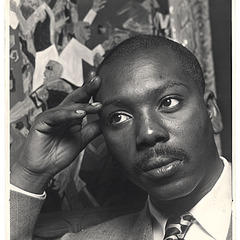
Jacob Lawrence
Jacob Lawrence, a renowned American painter, is known for his works depicting the history of African Americans. His paintings are typically presented in a series of small panels, each telling a complete story. Lawrence's style is unique, with vivid colors and strong narrative and expressive power. more
You May Also Like
Source: Szkice piórkiem
Source: A Man Without a Country
Source: On the Incarnation
“Art doesn’t need to be more complex or more realistic to be valid.”
Source: The Collected Complete Works Of Oscar Wilde
Source: Mina's Matchbox
“You don´t know exactly what you'll find.”
Source: Genaro Strobel: Size
“Creating what you want others to see is not art, it's commerce”