Quotessence
Home / Quotes / Quote by William Ralph Inge

Quote by William Ralph Inge

Author

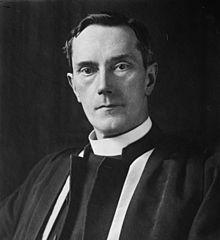
William Ralph Inge
William Ralph Inge

William Ralph Inge, a British author, was born on June 6, 1860, and died on February 26, 1954. He is a renowned novelist and playwright in the history of British literature, known for his unique literary style and profound insights into human nature. more

You May Also Like

“Worship demands the far distances of God; it protests against the little, the near, the material. It must love but it must look up. It cannot live without the note of spirituality and universality, if not mystery. The ascension, the passing of Christ within the veil, answers this need. So does a full-robed Christianity add to definiteness of knowledge the outreach of imagination and home.”

“What is our hope but the indwelling Spirit of Christ, to bring every thought into captivity to the obedience of Christ, to inspire every word and deed by His love? Then will "broken lights" blend in steady shining, the fractional be summed up in the integral, and life, unified and beautified by the central Christ, radiate God's glory, and shine with divine effulgence.”

“I agree with you that the communion with the invisible saints must be more of a dream than a reality. But we have a right to dream dreams, if they are not contradicted by the evident laws of God's word, or God's world.”

“If a friend is the one who summons us to our best, then is not Jesus Christ our best friend, and should we not think of the Communion as one of His chief appeals to us to be our best? The Lord's Supper looks not back to our past with a critical eye, but to our future, with a hopeful one. The Master appeals from what we have been to what we may be. He bids us come, not because we are better than we have been, but because He wants us to be. To stay away because our hearts are cold is to refuse to go to the fire till we are warm.”

“Unless we realize our sins enough to call them by name, it is hardly worth while to say anything about them at all. When we pray for forgiveness, let us say, "my temper," or "untruthfulness," or "pride," "my selfishness, my cowardice, indolence, jealousy, revenge, impurity." To recognize our sins, we must look them in the face and call them by their right names, however hard. Honesty in confession calls for definiteness in confession.”

“Although there is nothing so bad for conscience as trifling, there is nothing so good for conscience as trifles. Its certain discipline and development are related to the smallest things. Conscience, like gravitation, takes hold of atoms. Nothing is morally indifferent. Conscience must reign in manners as well as morals, in amusements as well as work. He only who is "faithful in that which is least" is dependable in all the world.”

“If God made no response except to perfect faith, who could hope for help? But God has regard for beginnings, and His eye perceives greatness in the germ. The hand of the woman in the crowd trembled as it was stretched toward Jesus, and the faith back of it was superstitiously reverent, trusting in the virtue of the robe, rather than in the One who wore it; yet the genuineness of that faith; feeble though it was, triumphed in God's loving sight. Real trust is real power, though the heart and hand be feeble.”

“It is the "where I am" that makes heaven. The life after death might become through its very endlessness a burden to our spirits, if it were not to be filled with the infinite variety and freshness of God's love. Some have shrunk from its very infinitude, because they have not realized what God's love can make of it. Human love helps us to understand this. When we have come to love any one with all our power of affection, then there is no monotony or weariness in the days and hours we spend with them.”