Quotessence
Home / Quotes / Quote by Neil Armstrong

Quote by Neil Armstrong

“I can honestly say - and it's a big surprise to me - that I have never had a dream about being on the moon.”

Quote by Neil Armstrong

Author
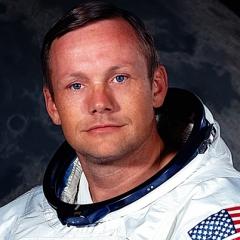
Neil Armstrong
Neil Armstrong

Neil Armstrong, born on August 5, 1930, in Ohio, United States, was an American astronaut and the first human to walk on the Moon. On July 20, 1969, as the commander of Apollo 11, Armstrong made history by becoming the first person to set foot on the lunar surface. His famous quote, 'That's one small step for man, one giant leap for mankind,' has become an iconic statement in human space exploration. more

You May Also Like

“The fear of AIDS imposes on an act whose ideal is an experience of pure presentness (and a creation of the future) a relation to the past to be ignored at one's peril. Sex no longer withdraws its partners, if only for a moment, from the social. It cannot be considered just a coupling; it is a chain, a chain of transmission, from the past.”

“Fear of sexuality is the new, disease-sponsored register of the universe of fear in which everyone now lives. Cancerphobia taught us the fear of a polluting environment; now we have the fear of polluting people that AIDS anxiety inevitably communicates. Fear of the Communion cup, fear of surgery: fear of contaminated blood, whether Christ's blood or your neighbor's.”

“The white race is the cancer of human history; it is the white race and it alone — its ideologies and inventions — which eradicates autonomous civilizations wherever it spreads, which has upset the ecological balance of the planet, which now threatens the very existence of life itself.”

“The need for truth is not constant; no more than is the need for repose. An idea which is a distortion may have a greater intellectual thrust than the truth; it may better serve the needs of the spirit, which vary. The truth is balance, but the opposite of truth, which is unbalance, may not be a lie.”

“In contrast to the asexual chasteness of official communist art , Nazi art is both prurient and idealizing. A utopian aesthetics (physical perfection; identity as a biological given) implies an ideal eroticism: sexuality converted into the magnetism of leaders and the joy of followers. The fascist ideal is to transform sexual energy into a "spiritual" force, for the benefit of the community.”