Quotessence
Home / Quotes / Quote by Susan Sontag

Quote by Susan Sontag

Author

Susan Sontag
Susan Sontag

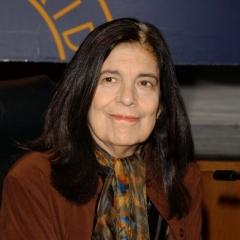
Susan Sontag was an American writer, critic, and photographer. Known for her unique literary style and profound thinking, her work spans various fields including literature, art, and politics. Born on January 16, 1933, she passed away on December 28, 2004. more

You May Also Like

“The need for truth is not constant; no more than is the need for repose. An idea which is a distortion may have a greater intellectual thrust than the truth; it may better serve the needs of the spirit, which vary. The truth is balance, but the opposite of truth, which is unbalance, may not be a lie.”

“In contrast to the asexual chasteness of official communist art , Nazi art is both prurient and idealizing. A utopian aesthetics (physical perfection; identity as a biological given) implies an ideal eroticism: sexuality converted into the magnetism of leaders and the joy of followers. The fascist ideal is to transform sexual energy into a "spiritual" force, for the benefit of the community.”

“War is a culture, bellicosity is addictive, defeat for a community that imagines itself to be history's eternal victim can be as intoxicating as victory. How long will it take for the Serbs to realize that the Milosevic years have been an unmitigated disaster for Serbia, the net result of Milosevic's policies being the economic and cultural ruin of the entire region, including Serbia, for several generations? Alas, one thing we can be sure of, that will not happen soon.”

“The unanimously applauded, self-congratulatory bromides of a Soviet Party Congress seemed contemptible. The unanimity of the sanctimonious, reality-concealing rhetoric spouted by American officials and media commentators in recent days seems, well, unworthy of a mature democracy.”

“If within the last century art conceived as an autonomous activity has come to be invested with an unprecedented stature - the nearest thing to a sacramental human activity acknowledged by secular society - it is because one of the tasks art has assumed is making forays into and taking up positions on the frontiers of consciousness (often very dangerous to the artist as a person) and reporting back what's there.”

“Total experiences, of which there are many kinds, tend again and again to be apprehended only as revivals or translations of the religious imagination. To try to make a fresh way of talking at the most serious, ardent, and enthusiastic level, heading off the religious encapsulation, is one of the primary intellectual tasks of future thought.”