“Early in my school career, I turned out to be an incorrigible disciplinary problem. I could understand what the teacher was saying as fast as she could say it, I found time hanging heavy, so I would occasionally talk to my neighbor. That was my great crime, I talked in school.”
Quote by Isaac Asimov
Work
It's Been a Good Life
This novel delves into the complexities of aging and the pursuit of a fulfilling life, offering a poignant look at the human experience. more
Author
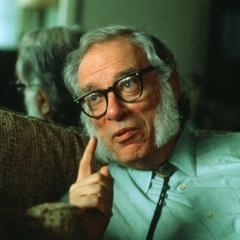
Isaac Asimov
Isaac Asimov, born on January 2, 1920 in Poland and died on April 6, 1992 in the United States, was a renowned American science fiction author, science writer, and literary critic, known as the 'Father of Science Fiction'. His works covered a wide range of science fiction themes, including robots, space exploration, and time travel, and had a profound impact on science fiction literature and the popularization of science. more
You May Also Like
Source: The Collected Works of George Bernard Shaw: Plays, Novels, Articles, Lectures, Letters and Essays: Pygmalion, Mrs. Warren’s Profession, Candida, Arms and The Man, Man and Superman, Caesar and Cleopatra, Androcles And The Lion, The New York Times Articles on War, Memories of Oscar Wilde and more
Source: Prejudices: Third Series
Source: Space and Geometry in the Light of Physiological, Psychological and Physical Inquiry
Source: Science and Culture: And Other Essays
Source: The Complete Poetical Works of William Wordsworth: Together with a Description of the Country of the Lakes in the North of England, Now First Published with His Works ...
Source: How to solve it: a new aspect of mathematical method
Source: William Jennings Bryan on Orthodoxy, Modernism, and Evolution