“I know a good many men of great learning-that is, men born with an extraordinary eagerness and capacity to acquire knowledge. One and all, they tell me that they can't recall learning anything of any value in school. All that schoolmasters managed to accomplish with them was to test and determine the amount of knowledge that they had already acquired independently-and not infrequently the determination was made clumsily and inaccurately.”
Quote by H. L. Mencken
Work
Prejudices: Third Series
In this third series of essays and short stories, the author delves into the complexities of prejudice, examining various aspects of societal norms and their impact on individuals and communities. more
Author
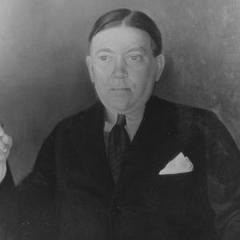
H. L. Mencken
H. L. Mencken was an American journalist, essayist, satirist, cultural critic, and scholar of American English. Born on September 12, 1880, and passing away on January 29, 1956, Mencken is renowned for his significant contributions to American culture and language, particularly through his satirical essays and critical analyses of the American establishment. more
You May Also Like
Source: Space and Geometry in the Light of Physiological, Psychological and Physical Inquiry
Source: Science and Culture: And Other Essays
Source: The Complete Poetical Works of William Wordsworth: Together with a Description of the Country of the Lakes in the North of England, Now First Published with His Works ...
Source: How to solve it: a new aspect of mathematical method
Source: William Jennings Bryan on Orthodoxy, Modernism, and Evolution
Source: Dave Barry Is Not Taking This Sitting Down
Source: How to solve it: a new aspect of mathematical method
Source: Elementary Mathematics from a Higher Standpoint: Volume I: Arithmetic, Algebra, Analysis