Quotessence
Home / Quotes / Quote by James P. Comer

Quote by James P. Comer

“Playing games with agreed upon rules helps children learn to live by rules, establish the delicate balance between competition andcooperation, between fair play and justice and exploitation and abuse of these for personal gain. It helps them learn to manage the warmth of winning and the hurt of losing; it helps them to believe that there will be another chance to win the next time.”

Quote by James P. Comer

Work

School Power: Implications of an Intervention Project

This book delves into the outcomes and implications of a specific intervention project implemented within a school setting. It examines the strategies employed, the challenges faced, and the overall impact on students, faculty, and the school community. more

Author
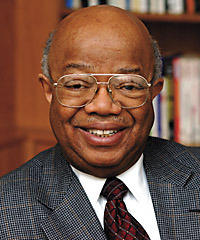
James P. Comer
James P. Comer

James P. Comer is an American author born on September 25, 1934. His works primarily focus on the field of education, particularly on child development and school reform. Comer's research and writings have had a profound impact on educational policies and practices. more

You May Also Like

“As blacks, we need not be afraid that encouraging moral development, a conscience and guilt will prevent social action. Black children without the ability to feel a normal amount of guilt will victimize their parents, relatives and community first. They are unlikely to be involved in social action to improve the black community. Their self-centered personalities will cause them to look out for themselves without concern for others, black or white.”

“Many more children observe attitudes, values and ways different from or in conflict with those of their families, social networks,and institutions. Yet today's young people are no more mature or capable of handling the increased conflicting and often stimulating information they receive than were young people of the past, who received the information and had more adult control of and advice about the information they did receive.”

“While most of today's jobs do not require great intelligence, they do require greater frustration tolerance, personal discipline,organization, management, and interpersonal skills than were required two decades and more ago. These are precisely the skills that many of the young people who are staying in school today, as opposed to two decades ago, lack.”

“Children in home-school conflict situations often receive a double message from their parents: "The school is the hope for your future, listen, be good and learn" and "the school is your enemy. . . ." Children who receive the "school is the enemy" message often go after the enemy--act up, undermine the teacher, undermine the school program, or otherwise exercise their veto power.”

“Often low-income parents give their children every other thing they need for successful participation in school and the world of work except the planning and organizing skills and habit patterns needed to operate in complex settings. Many intelligent and able college students from low-income backgrounds confront these deficits when faced with a heavy assignment load. . . . These patterns are best acquired at an early age and need to be quite well developed by late elementary school or twelve or thirteen years of age.”

“It is the women of Europe who pay the price while war rages, and it will be the women who will pay again when war has run its bloody course and Europe sinks down into the slough of poverty like a harried beast too spent to wage the fight. It will be the sonless mothers who will bend their shoulders to the plough and wield in age-palsied hands the reaphook.”

“The War of the Roses in England and the Civil War in America were both intestinal conflicts arising out of similar ideas. In the first the clash was between feudalism and the new economic order; in the second, between an agricultural society and a new industrial one. Both led to similar ends; the first to the founding of the English nation, and the second to the founding of the American. Both were strangely interlinked; for it was men of the old military and not of the new economic mind - men, such as Sir Humphrey Gilbert and Sir Walter Raleigh - who founded the English colonies in America.”