Quotessence
Home / Quotes / Quote by Leonard Trelawny Hobhouse

Quote by Leonard Trelawny Hobhouse

“The function of State coercion is to override individual coercion, and, of course, coercion exercised by any association of individuals within the State. It is by this means that it maintains liberty of expression, security of person and property, genuine freedom of contract, the rights of public meeting and association, and finally its own power to carry out common objects undefeated by the recalcitrance of individual members.”

Quote by Leonard Trelawny Hobhouse

Work

Liberalism

This book delves into the history, theories, and applications of liberalism, a key political ideology emphasizing individual rights, freedom, and equality. more

Author

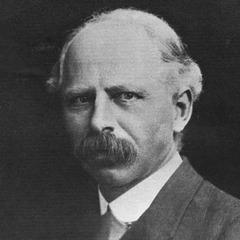
Leonard Trelawny Hobhouse

Leonard Trelawny Hobhouse was a notable British journalist and social reformer, recognized for his contributions to the discourse on social reform and political commentary. Born on September 8, 1864, and passing away on June 21, 1929, Hobhouse played a significant role in the Fabian Society and the intellectual movement of Fabian socialism. Hobhouse's career included journalism, where he worked for several newspapers and magazines, and he was also a prolific author. His focus was on social issues such as education, prison reform, and the rights of women and workers, advocating for social justice and equality. His writings had a profound impact on the development of social policies in the UK and internationally. more

You May Also Like

“Although it is true that only about 20 percent of American workers are in unions, that 20 percent sets the standards across the board in salaries, benefits and working conditions. If you are making a decent salary in a non-union company, you owe that to the unions. One thing that corporations do not do is give out money out of the goodness of their hearts.”

“In philosophical terms, the opposite of rationalism is not irrationalism but empiricism, that is, a willingness to form beliefs on the basis of experience rather than from a priori deduction. Empirical evidence never yields the dogmatic certainty that accompanies logical deduction.”