Quotessence
Home / Quotes / Quote by Edgar Allan Poe

Quote by Edgar Allan Poe

“Either the memory of past bliss is the anguish of to-day; or the agonies which are have their origins in ecstasies which might have been.”

Quote by Edgar Allan Poe

Work

EDGAR ALLAN POE: 72 Short Stories and Novels & 80+ Poems; Including Essays, Letters & Biography (Illustrated): Murders in the Rue Morgue, The Raven, Tamerlane, Ulalume, Annabel Lee, The Fall of the House of Usher, The Tell-tale Heart, Berenice, The Philosophy of Composition, The Poetic Principle, Eureka…

This book is a comprehensive compilation of Edgar Allan Poe's literary works, featuring a selection of his most renowned short stories such as 'The Raven' and 'The Tell-tale Heart', alongside a variety of poems and essays. It also includes his influential literary theories and his personal correspondence, offering a comprehensive view of Poe's contributions to the genres of horror, mystery, and poetry. more

Author
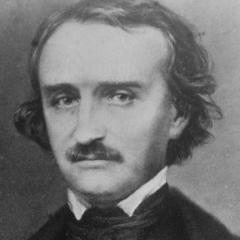
Edgar Allan Poe
Edgar Allan Poe

American author, poet, editor, and literary critic. Known for his short stories and poetry, particularly his works of horror and mystery. His most famous works include 'The Black Cat', 'The Raven', and 'Annabel Lee'. more

You May Also Like

“On those days when we're not ready to stop being offended, not ready to forgive, still determined to dish out the silent treatment, what we're actually saying is, "Thanks, but I don't want to become more like the Savior today. Maybe tomorrow, but not today." Perhaps those are the times when we need to pray the hardest, the times it becomes clear that a change in behavior is not enough--that we must have a change in nature.”

“You are out of control, Rand al'Thor,' she declared. I do what must be done,' he said, speaking now from the shadows. He sounded exhausted. ... I hate what you just did, Rand,' Nynaeve snarled. 'No, "Hate" isn't strong enough. I loathe what you've done. What has happened to you?' Test him!' Rand whispered, voice dangerous. 'Before condemning me, let us first determine if my sins have achieved anything beyond my own damnation.”

“His conviction of having no purpose in life other than to act as a distillation of poison was part of the ego of an eighteen-year-old. He had resolved that his beautiful white hands would never be soiled or calloused. He wanted to be like a pennant, dependent on each gusting wind. The only thing that seemed valid to him was to live for the emotions--gratuitous and unstable, dying only to quicken again, dwindling and flaring without direction or purpose.”

“Guilt is not a response to anger; it is a response to one’s own actions or lack of action. If it leads to change then it can be useful, since it is then no longer guilt but the beginning of knowledge. Yet all too often, guilt is just another name for impotence, for defensiveness destructive of communication; it becomes a device to protect ignorance and the continuation of things the way they are, the ultimate protection for changelessness.”