“Nothing is demonstrable, unless the contrary implies a contradiction. Nothing, that is distinctly conceivable, implies a contradiction. Whatever we conceive as existent, we can also conceive as non-existent. There is no being, therefore, whose non-existence implies a contradiction. Consequently there is no being, whose existence is demonstrable.”
Quote by David Hume
Work
Dialogues sur la religion naturelle
This book delves into the philosophical discourse on the nature of religion, examining its origins and implications in a naturalistic context. more
Author
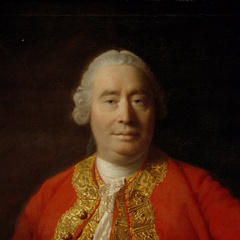
David Hume
David Hume, born on May 7, 1711, in Edinburgh, Scotland, and died on August 25, 1776, was an outstanding philosopher, historian, and economist. Known for his contributions to empiricism and skepticism, his works have had a profound impact on subsequent philosophy, economics, and psychology. more
You May Also Like
Source: An Enquiry Concerning Human Understanding: Revision of Great Book
Source: The Philosophy of David Hume
Source: An Enquiry Concerning Human Understanding ; [with] A Letter from a Gentleman to His Friend in Edinburgh ; [and] An Abstract of a Treatise of Human Nature
Source: An Enquiry Concerning the Human Understanding: And An Enquiry Concerning the Principles of Morals
Source: A Dissertation on the Passions: The Natural History of Religion : a Critical Edition
Source: Essays and Treatises on Several Subjects
Source: Essays Moral, Political, and Literary
Source: A Treatise of Human Nature
Source: The Philosophical Works of David Hume ... Containing Dialogues Concerning Natural Religion, Essays on the Immortality of the Soul, Suicide ... &c. A New Edition