Quotessence
Home / Quotes / Quote by Joseph Chamberlain

Quote by Joseph Chamberlain

Author

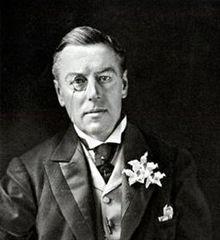
Joseph Chamberlain
Joseph Chamberlain

Joseph Chamberlain was a prominent British politician known for his significant influence in the late 19th and early 20th centuries. He was a key figure in British fiscal and colonial policies. more

You May Also Like

“Lying is a crime the least liable to variation in its definitions. A child will upon the slightest temptation tell an untruth as readily as the truth. That is, as soon as he can suspect that it will be to his advantage; and the dread that he afterward has of telling a lie is acquired principally by his being threatened, punished, and terrified by those who detect him in it, till at length, a number of painful impressions are annexed to the telling of an untruth, and he comes even to shudder at the thought of it.”

“[The doctrine of air] I was led into in consequence of inhabiting a house adjoining to a public brewery, where I at first amused myself with making experiments on the fixed air [carbon dioxide] which I found ready made in the process of fermentation . When I removed from that house I was under the necessity of making the fixed air for myself; and one experiment leading to another, as I have distinctly and faithfully noted in my various publications on the subject, I by degrees contrived a convenient apparatus for the purpose, but of the cheapest kind.”

“It is known to all persons who are conversant in experimental philosophy, that there are many little attentions and precautions necessary to be observed in the conducting of experiments, which cannot well be described in words, but which it is needless to describe, since practice will necessarily suggest them; though, like all other arts in which the hands and fingers are made use of, it is only much practice that can enable a person to go through complex experiments, of this or any kind, with ease and readiness.”

“The mind of man can never be wholly barren. Through our whole lives we are subject to successive impressions; for, either new ideas are continually flowing in, or traces of the old ones are marked deeper. If, therefore, you be not acquiring good principles be assured that you are acquiring bad ones; if you be not forming virtuous habits you are, how insensibly soever to yourselves, forming vicious ones.”

“When we say there is a GOD, we mean that there is an intelligent designing cause of what we see in the world around us, and a being who was himself uncaused.”

“We find upon all occasions, the early Christian writers speak of the Father as superior to the Son, and in general they give him the title of God , as distinguished from the Son; and sometimes they expressly call him, exclusively of the Son, the only true God ; a phraseology which does not at all accord with the idea of the perfect equality of all the persons in the Trinity. But it might well be expected, that the advances to the present doctrine of the Trinity should be gradual and slow. It was, indeed, some centuries before it was completely formed.”

“Most of the early Christian writers thought the text "I and my Father are one," was to be understood of an unity or harmony of disposition only. Thus Tertullian observes, that the expression is unum , one thing, not one person; and he explains it to mean unity, likeness, conjunction, and of the love that the Father bore to the Son. Origen says, "let him consider that text, 'all that believed were of one heart and of one soul,' and then he will understand this, 'I and my Father are one".”

“It is sufficiently evident from many circumstances, that the doctrine of the divinity of Christ did not establish itself without much opposition, especially from the unlearned among the Christians, who thought that it savoured of Polytheism , that it was introduced by those who had had a philosophical education, and was by degrees adopted by others, on account of its covering the great offence of the cross , by exalting the personal dignity of our Saviour.”