Quotessence
Home / Quotes / Quote by William Ernest Hocking

Quote by William Ernest Hocking

“What our view of the effectiveness of religion in history does at once make evident as to its nature is--first, its necessary distinction; second, its necessary supremacy. These characters though external have been so essential to its fruitfulness, as to justify the statement that without them religion is not religion. A merged religion and a negligible or subordinate religion are no religion.”

Quote by William Ernest Hocking

Work

The meaning of God in human experience: philosophic study of religion

The book is a comprehensive philosophic examination of religion, specifically concentrating on the role and significance of God in human life. It examines the philosophical underpinnings of religious beliefs and practices, offering insights into how the concept of God has been understood and debated throughout history. more

Author
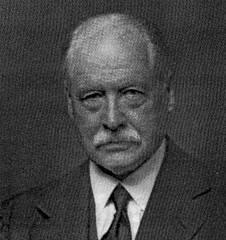
William Ernest Hocking

William Ernest Hocking was an American philosopher known for his contributions to moral and religious philosophy. His work had a profound impact on the philosophical community in the early 20th century, particularly in the field of moral philosophy. more

You May Also Like

“We are driven to confess that we actually care more for religion than we do for religious theories and ideas: and in merely making that distinction between religion and its doctrine-elements, have we not already relegated the latter to an external and subordinate position? Have we not asserted that "religion itself" has some other essence or constitution than mere idea or thought?”

“However rich we may become in knowledge of the deeper causes of historical results, we forgo all understanding of history if we forget this inner continuity,--i.e., the conscious intentions of the participants in history-making and their consciously known successes.”

“A person who wills to have a good will, already has a good will--in its rudiments. There is solid satisfaction in knowing that the mere desire to get out of an old habit is a material advance upon the condition of submergence in that habit. The longest step toward cleanliness is made when one gains--nothing but dissatisfaction with dirt.”

“This merely formal conceiving of the facts of one's own wretchedness is at the same time a departure from them--placing them in the object. It is not idle, therefore, to observe reflexively that in that very Thought, one has separated himself from them, and is no longer that which empirically he still sees himself to be.”

“For those who have only to obey, law is what the sovereign commands. For the sovereign, in the throes of deciding what he ought to command, this view of law is singularly empty of light and leading. In the dispersed sovereignty of modern states, and especially in times of rapid social change, law must look to the future as well as to history and precedent, and to what is possible and right as well as to what is actual.”