“This position will not be disputed so long as it is admitted that the desire of reward is one of the strongest incentives of human conduct, or that the best security for the fidelity of mankind is to make their interest coincide with their duty. Even the love of fame, the ruling passion of the noblest minds... would on the contrary deter him from the undertaking, when he foresaw that he must quit the scene before he could accomplish the work.”
Quote by Alexander Hamilton
Author
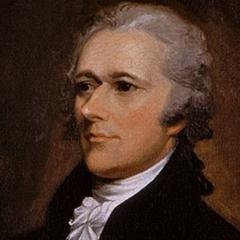
Alexander Hamilton
Alexander Hamilton was a Founding Father of the United States, born on January 11, 1757, and died on July 12, 1804. He played a crucial role in the American Revolutionary War and was instrumental in the drafting of the U.S. Constitution. As the first Secretary of the Treasury, Hamilton promoted fiscal stability and economic growth, establishing the First Bank of the United States and proposing solutions for federal debt. His ideas and policies had a profound impact on the early political and economic development of the United States. more
You May Also Like
Source: The federalist papers
Source: The federalist papers
Source: The Federalist, on the New Constitution ... by A. Hamilton, James Madison, and John Jay. With an Appendix Containing the Letters of Pacificus (A. Hamilton) and Helvidius (J. Madison), on the Proclamation of Neutrality of 1793; the Original Articles of Confederation ... Sixth Edition, Etc
Source: The Federalist on the New Constitution, Written in the Year 1788, with an Appendix Containing the Letters of Pacificus and Helvidius on the Proclamation of Neutrality of 1793
Source: The Fœderalist: A Collection of Essays, Written in Favor of the New Constitution, as Agreed Upon by the Fœderal Convention, September 17, 1787. Reprinted from the Original Text. With an Historical Introduction and Notes
Source: The Federalist Papers: A Collection of Essays Written in Favour of the New Constitution
Source: America's Founding Documents: The Declaration of Independence, the Articles of Confederation, the United States Constitution, the Federalist Papers, and the Bill of Rights
“The obscurity is much oftener in the passions and prejudices of the reasoner than in the subject.”