“Thought is no longer theoretical. As soon as it functions it offends or reconciles, attracts or repels, breaks, dissociates, unites or reunites; it cannot help but liberate or enslave. Even before prescribing, suggesting a future, saying what must be done, even before exhorting or merely sounding an alarm, thought, at the level of its existence, in its very dawning, is in itself an action-a perilous act.”
Quote by Michel Foucault
Work
Language, Counter-memory, Practice: Selected Essays and Interviews
The book encompasses a variety of perspectives on language, counter-memory, and practice, offering readers a comprehensive exploration of these concepts. It includes discussions on the role of language in shaping memory and the influence of practice on both individual and collective experiences. more
Author
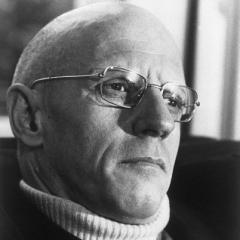
Michel Foucault
Michel Foucault was a French philosopher known for his critical analysis of knowledge, power, and discourse. His work covered a wide range of topics, including madness, prisons, sexuality, archaeology of knowledge, and biopolitics. Foucault's ideas have had a profound impact on postmodernism, critical theory, and cultural studies. more
You May Also Like
“I looked at the canine companion. “Me cookies. You stay.”
Source: Magic Bleeds
Source: Ask the Dust
Source: The Secret History
“Frugality is founded on the principal that all riches have limits.”
“Self-pity is like chocolate; as you get older, you can only afford a little bit.”
Source: Dead Over Heels
“I found the poems in the fields And only wrote them down”
Source: Poems by John Clare