“Instead of encouraging the student to devote himself to his studies for the sake of studying, instead of encouraging in him a real love for his subject and for inquiry, he is encouraged to study for the sake of his personal career; he is led to acquire only such knowledge as is serviceable in getting him over the hurdles which he must clear for the sake of his advancement.”
Quote by Karl Popper
Work
The Open Society and Its Enemies
This book delves into the concept of open societies, analyzing their characteristics and the historical figures and movements that have opposed them. It explores the philosophical underpinnings of open societies and the challenges they face, offering a comprehensive look at the dynamics of political and social systems. more
Author
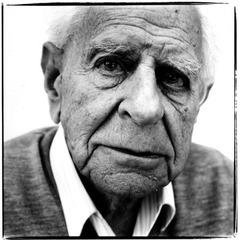
Karl Popper
Karl Popper (July 28, 1902 – September 17, 1994) was an influential philosopher known for his work on critical rationalism and falsificationism. He is renowned for his contributions to the philosophy of science, political philosophy, and epistemology, with his ideas having a profound impact on these fields. more
You May Also Like
Source: The Camel's Nose: Memoirs Of A Curious Scientist
Source: The Ultimate Quotable Einstein
“Most authors have one idea per book. Shakespeare had two per sentence.”
Source: The Life and Letters of Faraday
“The secret of the man who is universally interesting is that he is universally interested.”