Quotessence
Home / Quotes / Quote by John Cowper Powys

Quote by John Cowper Powys

Work

A Glastonbury Romance

Browse quotes and source details for this work. more

Author
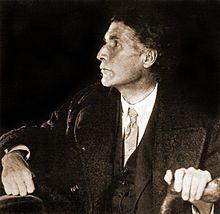
John Cowper Powys
John Cowper Powys

John Cowper Powys was an English novelist known for his profound psychological insights and exploration of human nature. His works are characterized by complex plots and rich symbolism, covering a wide range of themes from history to philosophy. more

You May Also Like

“Happy is he alone, to whom the Lord imputeth not sin. To have Him propitious to me, against whom alone I have sinned, suffices for all my righteousness. If my iniquity is great, Thy grace is much greater. When my soul is troubled at the view of its sinfulness, I look at Thy mercy , and am refreshed. It is a common good ; is offered to all ; and he only who rejects it, is deprived of its benefits. Let him rejoice who feels himself a wretch deserving of perpetual damnation ; for the grace of Jesus exceeds the number of all crimes. There is no sin greater than to despair of the forgiveness of sin ; for God is kind and merciful, ready to forgive.”

“That's just the trouble really. Nobody's shocked by anything anymore; we're not shocked by deceit, cruelty, lust for power, faithlessness, money-grubbing. Indeed, we accept it as inevitable that each and every one of our fellow men should be impelled only by selfishness. Well, sir, let me say that it's stupid of us not to be shocked, because the continuation of our civilisation depends precisely upon our ability to be shocked.”

“Under these circumstances the most anodyne book was a source of danger from the simple fact that love was alluded to, and woman depicted as an attractive creature; and this was enough to account for all—for the inherent ignorance of Catholics, since it was proclaimed as the preventive cure for temptations—for the instinctive horror of art, since to these craven souls every written and studied work was in its nature a vehicle of sin and an incitement to fall. Would it not really be far more sensible and judicious to open the windows, to air the rooms, to treat these souls as manly beings, to teach them not to be so much afraid of their own flesh, to inculcate the firmness and courage needed for resistance? For really it is rather like a dog which barks at your heels and snaps at your legs if you are afraid of him, but who beats a retreat if you turn on him boldly and drive him off. The fact remains that these schemes of education have resulted, on the one hand, in the triumph of the flesh in the greater number of men who have been thus brought up and then thrown into a worldly life, and on the other, in a wide diffusion of folly and fear, an abandonment of the possessions of the intellect and the capitulation of the Catholic army surrendering without a blow to the inroads of profane literature, which takes possession of territory that it has not even had the trouble of conquering. This really was madness! The Church had created art, had cherished it for centuries; and now by the effeteness of her sons she was cast into a corner. All the great movements of our day, one after the other—romanticism, naturalism—had been effected independently of her, or even against her will. If a book were not restricted to the simplest tales, or pleasing fiction ending in virtue rewarded and vice punished, that was enough; the propriety of beadledom was at once ready to bray. As soon as the most modern form of art, the most malleable and the broadest—the Novel—touched on scenes of real life, depicted passion, became a psychological study, an effort of analysis, the army of bigots fell back all along the line. The Catholic force, which might have been thought better prepared than any others to contest the ground which theology had long since explored, retired in good order, satisfied to cover its retreat by firing from a safe distance, with its old-fashioned match-lock blunderbusses, on works it had neither inspired nor written. The Church party, centuries behind the time, and having made no attempt to follow the evolution of style in the course of ages, now turned to the rustic who can scarcely read; it did not understand more than half of the words used by modern writers, and had become, it must be said, a camp of the illiterate. Incapable of distinguishing the good from the bad, it included in one condemnation the filth of pornography and real works of art; in short, it ended by emitting such folly and talking such preposterous nonsense, that it fell into utter discredit and ceased to count at all. And it would have been so easy for it to work on a little way, to try to keep up with the times, and to understand, to convince itself whether in any given work the author was writing up the Flesh, glorifying it, praising it, and nothing more, or whether, on the contrary, he depicted it merely to buffet it—hating it. And, again, it would have done well to convince itself that there is a chaste as well as a prurient nude, and that it should not cry shame on every picture in which the nude is shown. Above all, it ought to have recognized that vices may well be depicted and studied with a view to exciting disgust of them and showing their horrors.”

“Buddha says: Love yourself. To love yourself is to get rid of self-condemnation and thinking that you are not worthy or loved by existence. Love yourself, says Buddha, but love begins with yourself and then it goes on spreading. Love yourself; says Buddha, and then adds and Watch. This is meditation, but the first requirement is to love yourself. A person who loves himself can easily become meditative, because meditation means to love yourself and to be with yourself. meditation is to enjoy yourself in your beautiful aloneness. Celebrating yourself is what meditation is all about. To be is the greatest miracle and meditation opens the door to this great miracle. But only a man who loves himself can meditate. Unless you love yourself, you cannot be with yourself. Create a loving climate and atmosphere around yourself. Love your body and love your mind. By loving yourself, you will destroy the self-condemnation that society has implanted within you.”

“Listen, the bass lisper intoned. At the time Marie and I did away with that baby, we felt ourselves to be working in the service of good. Honestly! We loved one another; the baby was not quite right; was an impediment to our love; its (his) stunted development impeded the natural expression of our love (we could not travel, could not dine out, were rarely given the slightest degree of privacy) and so it seemed (to us, at that time) that to remove the negative influence that was that baby (by dropping him into Furniss Creek) would free us up; to be more loving, and be more fully in the world, and would relieve him of the suffering entailed in being forevermore not quite right; would, that is, free him up from his suffering as well, and maximize the total happiness. - It seemed that way to you, the Brit said. - It did, it truly did, the bass lisper said. - Does it seem that way to you now? the woman asked. - Less so, the bass lisper said sadly. - Then your punishment is having the desired effect, the woman said.”