Quotessence
Home / Quotes / Quote by Zora Neale Hurston

Quote by Zora Neale Hurston

“Most humans didn't love one another nohow, and this mislove was so strong that even common blood couldn't overcome it all the time. She had found a jewel down inside herself and she had wanted to walk where people could see her and gleam it around. But she had been set in the market-place to sell. Been set for still-bait. When God had made The Man, he made him out of stuff that sung all the time and glittered all over. Then after that some angels got jealous and chopped him into millions of pieces, but still he glittered and hummed. So they beat him down to nothing but sparks but each little spark had a shine and a song. So they covered each one over with mud. And the lonesomeness in the sparks make them hunt for one another, but the mud is deaf and dumb. Like all the other tumbling mud-balls, Janie had tried to show her shine.”

Quote by Zora Neale Hurston

Work

Their Eyes Were Watching God

This novel follows the life of Janie Crawford, a woman who seeks independence and self-fulfillment in a society that limits her options. It delves into themes of identity, love, and the search for personal freedom. more

Author
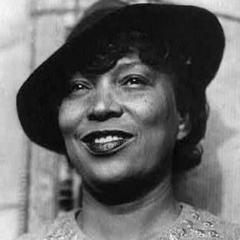
Zora Neale Hurston
Zora Neale Hurston

Zora Neale Hurston (1891-1960) was an American anthropologist, folklorist, and novelist who played a pivotal role in the Harlem Renaissance. Born in Alabama and raised in Eatonville, Florida, she became the first African American student at Barnard College, Columbia University, studying under Franz Boas. Hurston is best known for her novel "Their Eyes Were Watching God," now considered a classic of American literature. She conducted extensive anthropological fieldwork in the American South and Caribbean, preserving African American folk traditions. Though largely forgotten after her death, her work was revived by Alice Walker in the 1970s, establishing her as a foundational figure in African American literature and anthropology. more

You May Also Like

“There are no absolutes as to how to bridge these gaps between women of color and white women. We can lay out theories and ideas of how to do it step-by-step, but at the end of the day, white people have to care about restoring their own humanity so that BIPOC and other invisible minorities can live in peace and thrive.”

“من مخالف ادب بچه نیستم، مخالف پاکیزگی یا علم نیستم، اما سوال اصلی این است :(( از چه شیوه هایی برای رسیدن به این منظورها استفاده می شود؟)) اگر شیوه ها عبارت باشند از ناسزا، حمله و تهدید، مطمئن باشید که ما نیز، برای سازگاری با محیط، به کودک ناسزا، حمله و تهدید را آموخته ایم. در عوض اگر شیوه های انسانی را به آنها بیاموزیم، چیزی به مراتب والاتر از محاسن انتزاعی به آنها یاد داده ایم. ما به بچه می آموزیم چگونه یک انسان باشد، انسانی که بتواند در زندگی، با قدرت و شأن انسان حرکت کند.”

“During the brief war with Iran, I found myself several times trapped in the neighborhood bomb shelter with people I barely knew. It was stressful. The missiles were frightening, but there was something straightforward and clear about them. People, on the other hand, are a lot more ambiguous and confusing, especially when they’re crammed into a small, closed space, listening to sirens and explosions on the other side of a concrete wall. But the explosive reality outside the shelter was soon forgotten, replaced by an unpleasant group dynamic that reminded me of a bad high school field trip: Who ends up sitting in the unsafe spot right opposite the door? When are we allowed to open it and leave? How do I get away from the sweaty neighbor who keeps checking his WhatsApp updates? And how the hell do you explain to the sad French Bulldog who’s in love with your left leg that you’re a happily married man? And yet all these worries, exasperating though they are, pale in comparison with the one really important question: When the missile attack finally ends and we open that steel door, what kind of world will be waiting for us out there?”

“Così è successo questo fatto. Ora non lo trovi affatto strano, a pensarvi, ma naturale di quella naturalezza che una volta dev'esserci stata tra gli uomini. Dopo la prima sorpresa tutti i miei gesti furono naturali, non sentivo nessun timore, né alcun desiderio di difendermi o di offendere. Era una cosa molto semplice. Anche i russi erano come me, lo sentivo. In quell'isba si era creata tra me e i soldati russi, le donne e i bambini un'armonia che non era un armistizio. Era qualcosa di molto più del rispetto che gli animali della foresta hanno l'uno per l'altro.”