“More profoundly, Nihilist "simplification" may be seen in the universal prestige today accorded the lowest order of knowledge, the scientific, as well as the simplistic ideas of men like Marx, Freud, and Darwin, which underlie virtually the whole of contemporary thought and life. We say "life," for it is important to see that the Nihilist history of our century has not been something imposed from without or above, or at least has not been predominantly this; it has rather presupposed, and drawn its nourishment from, a Nihilist soil that has long been preparing in the hearts of the people. It is precisely from the Nihilism of the commonplace, from the everyday Nihilism revealed in the life and thought and aspiration of the people, that all the terrible events of our century have sprung. The world-view of Hitler is very instructive in this regard, for in him the most extreme and monstrous Nihilism rested upon the foundation of a quite unexceptional and even typical Realism. He shared the common faith in "science," "progress," and "enlightenment" (though not, of course, in "democracy"), together with a practical materialism that scorned all theology, metaphysics, and any thought or action concerned with any other world than the "here and now," priding himself on the fact that he had "the gift of reducing all problems to their simplest foundations." He had a crude worship of efficiency and utility that freely tolerated "birth control", laughed at the institution of marriage as a mere legalization of a sexual impulse that should be "free", welcomed sterilization of the unfit, despised "unproductive elements" such as monks, saw nothing in the cremation of the dead but a "practical" question and did not even hesitate to put the ashes, or the skin and fat, of the dead to "productive use." He possessed the quasi-anarchist distrust of sacred and venerable institutions, in particular the Church with its "superstitions" and all its "outmoded" laws and ceremonies. He had a naive trust in the "natural mom, the "healthy animal" who scorns the Christian virtues--virginity in particular--that impede the "natural functioning" of the body. He took a simple-minded delight in modern conveniences and machines, and especially in the automobile and the sense of speed and "freedom" it affords. There is very little of this crude Weltanschauung that is not shared, to some degree, by the multitudes today, especially among the young, who feel themselves "enlightened" and "liberated," very little that is not typically "modern.”
Quote by Seraphim Rose
Author
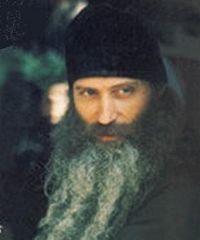
Seraphim Rose
Seraphim Rose was a Russian-born American author known for his profound insights into Orthodox theology and philosophy. His works covered a wide range of topics from mystical experiences to social criticism, having a significant impact on contemporary Orthodox thought. more
You May Also Like
Source: Bone Gap
Source: Lanark County Calendar
Source: Lanark County Calendar
Source: Cold Turkey at Nine: The Memoir of a Problem Child
“I know this place like I know the calluses on my hands.”
Source: Dogwood Blues
Source: Lanark County Calendar
Source: Bone Gap
Source: The Dirty Life: On Farming, Food, and Love