Quotessence
Home / Quotes / Quote by Joe Rogan

Quote by Joe Rogan

“I definitely had one guy come up to me and ask if I knew where to get DMT. He had a crewcut and he didn't look like he'd ever done a drug in his life. He didn't seem curious he seemed like he wanted to get me to do something. Like "You're the laziest narc ever dude. This is ridiculous. What, do you think I bring drugs around with me? Are you retarded? Why don't you go find gangsters?"”

Quote by Joe Rogan

Author
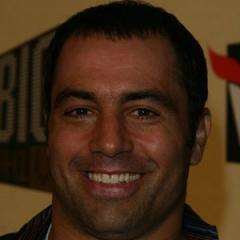
Joe Rogan
Joe Rogan

Joe Rogan, born on August 11, 1967, is a renowned American stand-up comedian. Known for his humorous and insightful take on life, Rogan has gained popularity for his unique style of comedy. In addition to being a comedian, Rogan is also a martial arts enthusiast, podcast host, and television personality. more

You May Also Like

“It's a weird experience when you're just trying to talk openly about how you think psychedelic drugs and marijuana are beneficial, or a lot of different drugs, especially plant-based ones, can be beneficial. Especially those ones that have some connection to organic life, I feel like you can learn something from them, from mushrooms, from peyote, from marijuana. They can be used as a tool.”

“I brought something back from those experiences [with drugs] which made me softer, open to other ideas. And I've learned from listening to other people talk about their experiences, from listening to Bill Hicks or reading Terrence McKenna or Aldous Huxley and Timothy Leary. But there's always some dumb cop out there who says "We don't need another legal drug and there's psychological addiction and blah blah blah."”

“Actually the royal family were very gracious and good to me. But I also found that the British establishment were never quite sure what to make of me. I was a Labour figure, but I'd come from a very middle-class background. In one sense I offended both traditional right and traditional left. But I thought that was no bad thing.”

“There are two outstanding issues in democratic politics these days. One is the relationship with the media, which is now 24/7, and operates with a completely different intensity than even 15 or 20 years ago. How do we have a proper conversation between leaders and country when it's moderated sometimes in a very partisan and inflammatory way? And the second thing is the effectiveness of our democracy. How do we get the right gene and talent pool in politics?”