“For such is the nature of men, that howsoever they may acknowledge many others to be more witty, or more eloquent, or more learned, yet they will hardly believe there be many so wise as themselves, for they see their own wit at hand, and other men's at a distance. But this proveth rather that men are in that point equal, than unequal. For there is not ordinarily a greater sign of the equal distribution of any thing than that every man is contented with his share.”
Quote by Thomas Hobbes
Work
The English Works of Thomas Hobbes of Malmesbury
This compilation includes seminal works such as 'Leviathan' and 'De Cive', exploring themes of sovereignty, government, and human nature. more
Author
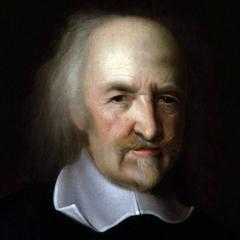
Thomas Hobbes
Thomas Hobbes, a British philosopher, politician, historian, economist, and writer, was born on April 5, 1588, in Wiltshire, and died on December 4, 1679, in Oxford, England. Hobbes is considered one of the most important philosophers of the 17th century, known for his profound analysis of the state, society, and human behavior. more
You May Also Like
“Men measure not only other men, but all other things, by themselves.”
Source: Leviathan - Revised Edition
Source: Leviathan
Source: The Moral and Political Works To which is Prefixed the Autors Life, Extracted from that Said to be Written by Himself ... Illustr. by the Ed. - London 1750
Source: The Moral and Political Works of Thomas Hobbes of Malmesbury: Never Before Collected Together : To which is Prefixed, the Author's Life, Extracted from that Said to be Written by Himself, ...
Source: Leviathan
Source: The English Works of Thomas Hobbes of Malmesbury
Source: Leviathan
Source: Leviathan
“Understanding is by the flame of the passions never enlightened, but dazzled.”
Source: Leviathan