Quotessence
Home / Quotes / Quote by Robert Kuttner

Quote by Robert Kuttner

“Both rich and poor nations have a common stake in policies that put the globe on a sustainable development path. The conflict is less between poor and rich countries than between the broad interests of people and the narrow interests of extractive industries. We need to find our way towards some kind of global regime that reduces emissions of the greenhouse gases, but well-off nations need to transfer the technology to make this possible, rather than viewing this shift as one more opportunity for private industry to profit.”

Quote by Robert Kuttner

Author
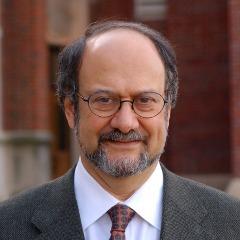
Robert Kuttner
Robert Kuttner

Robert Kuttner (born April 17, 1943) is a prominent American journalist, author, and political commentator. He is co-founder and co-editor of The American Prospect magazine, focusing on economic inequality, social policy, and democracy. Known for his critique of free-market capitalism and advocacy for social democracy, Kuttner has written influential books such as "The End of Laissez-Faire" and "The Betrayal of the American Dream." His articles appear in The New York Times, The Washington Post, and The New Republic. He has taught at Harvard University and Brandeis University, contributing to public policy research. Kuttner is regarded as a leading voice of American progressivism. more

You May Also Like

“But here is the heart of the moral issue for many of us. Simply put, those around the world who have contributed least to global warming and climate change will be the most and first to be impacted by the consequences of it all. Sadly, it's an old story. We, the affluent, create the problem, and the poor pay the price for our sins. It is wrong, and it is a sin-ours.”

“Soils could also be giving up their carbon stores: evidence emerged in 2005 that a vast expanse of western Siberia was undergoing an unprecedented thaw. The region, the largest frozen peat bog in the world, had begun to melt for the first time since it formed 11,000 years ago. Scientists believe the bog could begin to release billions of tonnes of methane locked up in the soils, a greenhouse gas 20 times more potent than carbon dioxide. The World Meteorological Organisation recently reported the largest annual rise of methane levels in the atmosphere for a decade.”

“The greenhouse crisis is the bill coming due for the Industrial Revolution. It's not an accident. It's the logical outcome of our world view - the idea that we can control the forces of nature, that we can have short-term expedient gains without paying for them, that there are no limits to exploitation of the environment, that we can produce and consume faster than nature's ability to replenish.”

“The models that have been constructed agree that when, as has been predicted, the level of carbon dioxide or its equivalent in other greenhouse gases doubles from pre-Industrial Revolution concentrations, the global average temperature will increase, and that the increase will be 1.5 to 4.5 degrees Celsius or 3 to 8 degrees Fahrenheit... In Dallas, for instance, a doubled level of carbon dioxide and other gases like methane, would increase the number of days a year with temperatures above 100 degrees from 19 to 78 each year.”

“The unthinkable is that we're distorting this atmospheric balance. We're shifting the chemical balance so that we have more poisons in the atmosphere - ozones and acid rain on ground level - while we're also changing the thermal climate of the earth through the greenhouse effect and - get this - simultaneously causing destruction of our primary filter of ultraviolet light. It's incredible. Talk about the national-debt crisis - we're piling up debts in the atmosphere, and the piper will want to be paid.”

“These things are happening in large measure because of us. We in this country burn 25 percent of the world's fossil fuel, create 25 percent of the world's carbon dioxide. It is us - it is the affluent lifestyles that we lead that overwhelmingly contribute to this problem. And to call it a problem is to understate what it really is. Which is a crime. Crime against the poorest and most marginalized people on this planet. We've never figured out, though God knows we've tried, a more effective way to destroy their lives.”