Quotessence
Home / Quotes / Quote by David Ricardo

Quote by David Ricardo

Work

Works: With a Notice of the Life and Writings of the Author

This volume compiles a selection of the author's writings, offering readers a glimpse into their extensive literary output. It includes an introductory section that provides insight into the author's life and the context of their work. more

Author
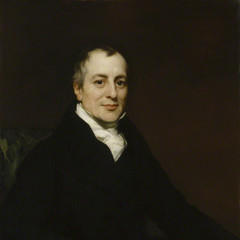
David Ricardo
David Ricardo

David Ricardo (April 18, 1772 - September 11, 1823) was a British economist and one of the key figures in the classical school of economics. He is known for his theory of comparative advantage, which has had a profound impact on the development of economics. more

You May Also Like

“After all the fertile land in the immediate neighbourhood of the first settlers were cultivated, if capital and population increased, more food would be required, and it could only be procured from land not so advantageously situated.”

“Four things have almost invariably followed the imposition of controls to keep prices below the level they would reach under supply and demand in a free market: (1) increased use of the product or service whose price is controlled, (2) Reduced supply of the same product or service, (3) quality deterioration, (4) black markets.”

“The poverty rate among black married couples has been in single digits ever since 1994. You would never learn that from most of the media. Similarly you look at those blacks that have gone on to college or finished college, the incarceration rate is some tiny fraction of what it is among those blacks who have dropped out of high school. So it’s not being black; it’s a way of life. Unfortunately, the way of life is being celebrated not only in rap music, but among the intelligentsia, is a way of life that leads to a lot of very big problems for most people.”

“The vision of the anointed is one in which ills as poverty, irresponsible sex, and crime derive primarily from 'society,' rather than from individual choices and behavior. To believe in personal responsibility would be to destroy the whole special role of the anointed, whose vision casts them in the role of rescuers of people treated unfairly by 'society'.”

“Out of every hundred new ideas ninety-nine or more will probably be inferior to the traditional responses which they propose to replace. No one man, however brilliant or well-informed, can come in one lifetime to such fullness of understanding as to safely judge and dismiss the customs or institutions of his society, for those are the wisdom of generations after centuries of experiment in the laboratory of history.”

“In their zeal for particular kinds of decisions to be made, those with the vision of the anointed seldom consider the nature of the: process: by which decisions are made. Often what they propose amounts to third-party decision making by people who pay no cost for being wrong-surely one of the least promising ways of reaching decisions satisfactory to those who must live with the consequences.”