Quotessence
Home / Quotes / Quote by Noam Chomsky

Quote by Noam Chomsky

“The Irish were treated horribly, even here in Boston. For example, in the late nineteenth century they were treated pretty much like African Americans. You could find signs here in Boston in the restaurants saying "No dogs and Irish."”

Quote by Noam Chomsky

Author
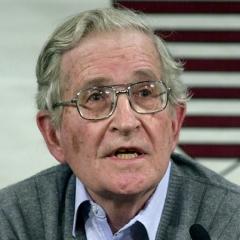
Noam Chomsky
Noam Chomsky

Noam Chomsky, born on December 7, 1928, is a renowned linguist from the United States. His research in generative grammar and transformational grammar has had a profound impact on modern linguistics. Chomsky's academic achievements extend beyond linguistics, as he is also an active political commentator and philosopher, known for his unique perspective and profound insights. more

You May Also Like

“The most dramatic case is that of the Central Americans. Why are people fleeing Central America? It's because of the atrocities the U.S. committed there. Take Boston, where there's a fairly large Mayan population. These people are fleeing from the highlands of Guatemala, where there was virtual genocide in the early 1980s backed by Ronald Reagan. The region was devastated, and people are still fleeing to this day, yet they're sent back.”

“Just recently, the administration of Barack Obama, which has broken all sorts of records in regards to deportation, picked up a Guatemalan man living here [in U.S]. I think he had been living here for twenty-five years, had a family, a business, and so on. He had fled from the Mayan region and they picked him up and deported him. To me, that's really sick.”

“There had been a free and open election in Haiti in the early 1990s and president Jean-Bertrand Aristide won, a populist priest. A few months later came the expected military coup - a very vicious military junta took over, of which the United States was passively supportive. Not openly, of course, but Haitians started to flee from the terror and were sent back and on towards Guantanamo Bay. Of course, that is against International Law. But the United States pretended that they were "economic refugees."”