Quotessence
Home / Quotes / Quote by Jean Baudrillard

Quote by Jean Baudrillard

“The Cynecure. Looking for the Cynecure (in the palinody of my cenesthesias, as Segalen would say). The Sabbatical form. What was the Stoic dream of our adolescence - detachment - suddenly materializes in maturity. I now find myself out on my own, within a rainbow-hued research structure. Towns are never left alone; there are always works going on - digging, demolition, construction. Knocking down, building up again. Perhaps only certain places in California, completely anaesthetized by domestic luxury and suburban comfort, seem to have come to rest in a fixed and lasting ambience, beyond this perpetual deconstruction. Works are always going on in our bodies too. They are constantly being disturbed, tortured, renovated. Never at rest, never serene. Peace of mind - impossible to keep it more than a few hours. Impatience always gets the upper hand. Everyone aspires to peace and quiet, but they do so today in a thoroughly derisory manner, wherein we see the last moments of the contemplative soul. In the countryside there is always a dog howling. And sterility is hereditary.”

Quote by Jean Baudrillard

Work

Cool memories

This book is a compilation of personal anecdotes and memories that evoke a sense of nostalgia for the reader, capturing the essence of bygone times and the emotions associated with them. more

Author
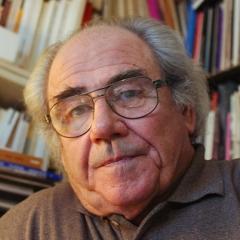
Jean Baudrillard
Jean Baudrillard

Jean Baudrillard was a French philosopher known for his critical studies on consumerism, media, and semiotics. His theories have had a profound impact on postmodernism and cultural studies. more

You May Also Like

“I was living in a state where the mountains tower up to 12,637 feet and some of them have manned telescopes atop them! Many towns are thousands of feet high in Arizona! I saw people just like me in those telescopes. Confused and forgetful, struggling in their jobs, looking ill, clearly fatigued and known to the management teams for their poor performance in the workplace. Some of my astronomy coworkers have died relatively young, others have gone on to develop cancers and illnesses, and some are just weird! Hypoxia can do a myriad of strange things to people.”

“And at night the river flows, it bears pale stars on the holy water, some sink like veils, some show like fish, the great moon that once was rose now high like a blazing milk flails its white reflection vertical and deep in the dark surgey mass wall river's grinding bed push. As in a sad dream, under the streetlamp, by pocky unpaved holes in dirt, the father James Cassidy comes home with lunchpail and lantern, limping, redfaced, and turns in for supper and sleep. Now a door slams. The kids have rushed out for the last play, the mothers are planning and slamming in kitchens, you can hear it out in swish leaf orchards, on popcorn swings, in the million-foliaged sweet wafted night of sighs, songs, shushes. A thousand things up and down the street, deep, lovely, dangerous, aureating, breathing, throbbing like stars; a whistle, a faint yell; the flow of Lowell over rooftops beyond; the bark on the river, the wild goose of the night yakking, ducking in the sand and sparkle; the ululating lap and purl and lovely mystery on the shore, dark, always dark the river's cunning unseen lips, murmuring kisses, eating night, stealing sand, sneaky. 'Mag-gie!' the kids are calling under the railroad bridge where they've been swimming. The freight train still rumbles over a hundred cars long, the engine threw the flare on little white bathers, little Picasso horses of the night as dense and tragic in the gloom comes my soul looking for what was there that disappeared and left, lost, down a path--the gloom of love. Maggie, the girl I loved.”

“Townsfolk have no conception of the peace that mother nature bestows, and as long as that peace is unfound the spirit must seek to quench its thirst with ephemeral novelties. And what is more natural that that of the townsman's feverish search for pleasure should mould people of unstable, hare-brained character, who think only of their personal appearance and their clothes and find momentary comfort in foolish fashions and other such worthless innovations? The countryman, on the other hand walks out into the verdant meadows, into an atmosphere clear and pure, and as he breaths it into his lungs some unknown power streams through his limbs, invigorating body and soul. The peace in nature fills his mind with calm and cheer, the bright green grass under his feet awakens a sense of beauty, almost of reverence. In the fragrance that is borne so sweetly to his nostrils, in the quietude that broods so blissfully around him, there is comfort and rest. The hillsides, the dingles, the waterfalls, and the mountains are all friends of his childhood, and never to be forgotten.”

“He lived with his mother, father and sister; had a room of his own, with the fourth-floor windows staring on seas of rooftops and the glitter of winter nights when home lights brownly wave beneath the heater whiter blaze of stars--those stars that in the North, in the clear nights, all hang frozen tears by the billions, with January Milky Ways like silver taffy, veils of frost in the stillness, huge blinked, throbbing to the slow beat of time and universal blood.”

“...Americans didn’t stick to cities, which makes us different from the people in other industrialized countries. We no sooner arrived in town, turning those towns into great mid-century metropolises, than we decided to take off for the green world beyond, so that by the 1970 Census, we had become the first suburban nation in the history of the world. And Detroit led the way, with a population curve up and down just like everywhere else, but with its urban decline a lot steeper over the past sixty years—so typical a place that it only looks like an exception.”