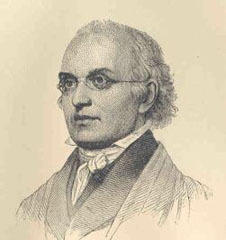
“The truth is, that, even with the most secure tenure of office, during good behavior, the danger is not, that the judges will be too firm in resisting public opinion, and in defence of private rights or public liberties; but, that they will be ready to yield themselves to the passions, and politics, and prejudices of the day.”
Quote by Joseph Story
“I used to go over to Gene Kelly's house and play volleyball, and Paul Newman and Marlon Brando were always there. You kind of took it for granted because I was 20, 21, 22, and they were a bit older - well, Gene certainly was. But it was just part of daily living. They were in the same profession, and you didn't think that much about it.”
“Without justice being freely, fully, and impartially administered, neither our persons, nor our rights, nor our property, can be protected. And if these, or either of them, are regulated by no certain laws, and are subject to no certain principles, and are held by no certain tenure, and are redressed, when violated, by no certain remedies, society fails of all its value; and men may as well return to a state of savage and barbarous independence.”
Source: Commentaries on the Constitution of the United States: With a Preliminary Review of the Constitutional History of the Colonies and States Before the Adoption of the Constitution
“The great object of my fear is the federal judiciary. That body, like gravity, ever acting, with noiseless foot, and unalarming advance, gaining ground step by step, and holding what it gains, is ingulfing insidiously the special governments into the jaws of that which feeds them.”
Source: The Real Thomas Jefferson
“Whoever attentively considers the different departments of power must perceive, that, in a government in which they are separated from each other, the judiciary, from the nature of its functions, will always be the least dangerous to the political rights of the Constitution; because it will be least in a capacity to annoy or injure them.”
Source: The Federalist on the New Constitution, Written in the Year 1788, with an Appendix Containing the Letters of Pacificus and Helvidius on the Proclamation of Neutrality of 1793
“. . . [The Judicial Branch] may truly be said to have neither FORCE nor WILL, but merely judgment; and must ultimately depend upon the aid of the executive arm even for the efficacy of its judgments.”
“The reasonableness of the agency of the national courts in cases in which the state tribunals cannot be supposed to be impartial, speaks for itself. No man ought certainly to be a judge in his own cause, or in any cause in respect to which he has the least interest or bias.”
Source: The Federalist
“But might not his [the president's] nomination be overruled? I grant it might, yet this could only be to make place for another nomination by himself. The person ultimately appointed must be object of his preference, though perhaps not in the first degree. It is also not very probable that his nomination would often be overruled.”
Source: The Fœderalist: A Collection of Essays, Written in Favor of the New Constitution, as Agreed Upon by the Fœderal Convention, September 17, 1787. Reprinted from the Original Text. With an Historical Introduction and Notes
“If, then, the courts of justice are to be considered as the bulwarks of a limited Constitution against legislative encroachments, this consideration will afford a strong argument for the permanent tenure of judicial offices, since nothing will contribute so much as this to that independent spirit in the judges which must be essential to the faithful performance of so arduous a duty.”
Source: The Fœderalist: A Collection of Essays, Written in Favor of the New Constitution, as Agreed Upon by the Fœderal Convention, September 17, 1787. Reprinted from the Original Text. With an Historical Introduction and Notes
“[T]hough individual oppression may now and then proceed fro the courts of justice, the general liberty of the people can never be endangered from that quarter . . .”
Source: The Essential Federalist: A New Reading of the Federalist Papers
“The interpretation of the laws is the proper and peculiar province of the courts. A constitution is, in fact, and must be regarded by the judges, as fundamental law. It therefore belongs to them to ascertain its meaning, as well as the meaning of any particular act proceeding from the legislative body. If there should happen to be an irreconcilable variance between the two, that which has the superior obligation and validity ought, of course, to be preferred; or, in other words, the Constitution ought to be preferred to the statute, the intention of the people to the intention of their agents.”
Source: The Essential Federalist: A New Reading of the Federalist Papers