Quotessence
Home / Quotes / Quote by Elena Ferrante

Quote by Elena Ferrante

“So what resurrection? It was only cosmetic, a powder of modernity applied randomly, and boastfully, to the corrupt face of the city. It happened like that every time. The scam of rebirth raised hopes and then shattered them, became crust upon ancient crusts.”

Quote by Elena Ferrante

Work

The Story of the Lost Child

Browse quotes and source details for this work. more

Author
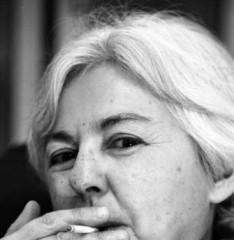
Elena Ferrante
Elena Ferrante

Elena Ferrante is a renowned contemporary Italian novelist, known for her unique narrative style and profound character portrayals. Her works cover a wide range of themes, including family, love, power, and social class. Ferrante's novels have received widespread acclaim both in Italy and around the world, despite the mystery surrounding her true identity. more

You May Also Like

“… there was a great uproar because a young man had just been murdered at the entrance to the library. That made me think that this story would continue forever, recounting now the efforts of children without privileges to improve themselves by getting books from the old shelves, as Lila and I had done as girls, and now the thread of seductive chatter, promises, deceptions, of blood that prevents any true improvement in my city or in the world.”

“finalement, éperdu d'amour et au comble de la frénésie érotique, je m'assis dans l'herbe et j'enlevai un de mes souliers en caoutchouc. — Je vais le manger pour toi, si tu veux. Si elle le voulait I Ha! Mais bien sûr qu'elle le voulait, voyons! C'était une vraie petite femme. --- Elle posa son cerceau par terre et s'assit sur ses ta-lons. Je crus voir dans ses yeux une lueur d'estime. Je n'en demandais pas plus. Je pris mon canif et enta-mai le caoutchouc. Elle me regardait faire. — Tu vas le manger cru ? — Oui. J'avalai un morceau, puis un autre. Sous son regard enfin admiratif, je me sentais devenir vraiment un homme. Et j'avais raison. Je venais de faire mon apprentissage. J'entamai le caoutchouc encore plus profondément, soufflant un peu, entre les bouchées, et je continuai ainsi un bon moment, jusqu'à ce qu'une sueur froide me montât au front. Je continuai même un peu au-delà, serrant les dents, luttant contre la nausée, ramassant toutes mes forces pour demeurer sur le terrain, comme il me fallut le faire tant de fois, depuis, dans mon métier d'homme. Je fus très malade, on me transporta à l'hôpital, ma mère sanglotait, Aniela hurlait, les filles de l'atelier geignaient, pendant qu'on me mettait sur un brancard dans l'ambulance. J'étais très fier de moi. Mon amour d'enfant m'inspira vingt ans plus tard mon premier roman Éducation européenne, et aussi certains passages du Grand Vestiaire. Pendant longtemps, à travers mes pérégrinations, j'ai transporté avec moi un soulier d'enfant en caoutchouc, entamé au couteau. J'avais vingt-cinq ans, puis trente, puis quarante, mais le soulier était toujours là, à portée de la main. J'étais toujours prêt à m'y attabler, à donner, une fois de plus, le meilleur de moi-même. Ça ne s'est pas trouvé. Finalement, j'ai abandonné le soulier quelque part derrière moi. On ne vit pas deux fois. (La promesse de l'aube, ch. XI)”

“Mountains could be what happens when Father Earth eats something that doesn’t agree with him. When he burps, mountains pop up." "That’s absurd," Keselo said, trying not to laugh. "If you’ve got a better theory, I’d be happy to hear it," Red-Beard said mildly. "Anyway, a burp isn’t anything but air that boils up out of a man’s stomach, so Father Earth’s mountains have chunks of empty air in the middle of them—burps that didn’t quite manage to make it to the surface, you understand.”

“Well, this time I'll be honest with you and let you in on it. Listen, in dreams and particularly in nightmares, caused perhaps by indigestion or whatever, a man may think up such artistic creations, such complex and realistic visions, events or even a whole world of events woven into a plot of such astounding details that even Leo Tolstoi himself could not invent them. And yet people who have such dreams don't have to be novelists but can be the most ordinary civil servants, newspapermen, priests, or anything . . . It creates, in fact, a most interesting problem: once, for instance, I heard a member of the government say that his best ideas came to him when he was asleep.”