Quotessence
Home / Quotes / Quote by Giuseppe Tomasi di Lampedusa

Quote by Giuseppe Tomasi di Lampedusa

“For over twenty-five centuries we’ve been bearing the weight of superb and heterogeneous civilizations, all from outside, none made by ourselves, none that we could call our own. This violence of landscape, this cruelty of climate, this continual tension in everything, and even these monuments of the past, magnificent yet incomprehensible because not built by us and yet standing round us like lovely mute ghosts; all those rulers who landed by main force from every direction who were at once obeyed, soon detested, and always misunderstood, their only expressions works of art we couldn't understand and taxes which we understood only too well and which they spent elsewhere: all these things have formed our character, which is thus conditioned by events outside our control as well as by a terrifying insularity of mind.”

Quote by Giuseppe Tomasi di Lampedusa

Work

The Leopard

A classic novel set in the final days of the Italian monarchy, it follows the life of a nobleman as he navigates the shifting political landscape and the decline of his family's power. The story is rich in historical detail and psychological insight, offering a poignant reflection on the end of an era. more

Author
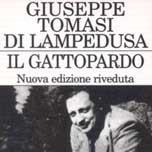
Giuseppe Tomasi di Lampedusa

Giuseppe Tomasi di Lampedusa was an Italian writer, best known for his novel 'The Leopard'. His works often revolve around the lives of the aristocracy, offering profound insights into social change and human nature. more

You May Also Like

“The island of Sicily is the largest in the Mediterranean. It has also proved, over the centuries, to be the most unhappy. The stepping-stone between Europe and Africa, the gateway between the East and the West, the link between the Latin world and the Greek, at once a stronghold, observation-point and clearing-house, it has been fought over and occupied in turn by all the great powers that have at various times striven to extend their dominion across the Middle Sea. It has belonged to them all—and yet has properly been part of none; for the number and variety of its conquerors, while preventing the development of any strong national individuality of its own, have endowed it with a kaleidoscopic heritage of experience which can never allow it to become completely assimilated. Even today, despite the beauty of its landscape, the fertility of its fields and the perpetual benediction of its climate, there lingers everywhere some dark, brooding quality—some underlying sorrow of which poverty, Church influence, the Mafia and all the other popular modern scapegoats may be the manifestations but are certainly not the cause. It is the sorrow of long, unhappy experience, of opportunity lost and promise unfulfilled; the sorrow, perhaps, of a beautiful woman who has been raped too often and betrayed too often and is no longer fit for love or marriage. Phoenicians, Greeks, Carthaginians, Romans, Goths, Byzantines, Arabs, Normans, Germans, Spaniards, French—all have left their mark. Today, a century after being received into her Italian home, Sicily is probably less unhappy than she has been for many centuries; but though no longer lost she still seems lonely, seeking always an identity which she can never entirely find.”

“Costanza non capiva sino in fondo, ma non poneva domande, tanto le piacevano quelle passeggiate in carrozza, seduta orgogliosa accanto al fratello maggiore, su e giù per il lungomare. Da un lato c'erano i grandi palazzi nobiliari con le loro terrazze lussureggianti. Sul marciapiede gremito di gente benvestita per la passeggiata si aprivano i caffè della Marina, davanti ai quali si fermavano le carrozze per il gelato. La strada costeggiava il mare limpido, tranquillo, su cui si rifletteva a occidente, magnifico, il lare protettore: Monte Pellegrino. I camerieri li servivano in carrozza. Si facevano strada in mezzo ai clienti seduti ai tavolini e alla gente che passeggiava davanti a loro tenendo in bilico sul braccio teso in alto, sulle teste dei passanti, grandi vassoi rotondi con sopra bicchieri d'acqua e coppette di metallo argentato piene di gelato rasato al bordo. Su ognuna era infilzato un biscotto tubolare, croccante. Costanza era golosa: assaporava con voluttà persino l'acqua dolce e rinfrescante, che sorbiva a piccoli sorsi dopo il gelato.”

“Ma gli altri, tutti quegli altri ragazzi a cui il «miracolo» di Anastasi ha dato un simbolo, un barlume di speranza, un anelito nuovo? Potranno almeno sperare di tenergli dietro e di vincere la vita, non sulle sole vie dello sport? Saremo un giorno anche noi come gli altri, in una società più civile, più larga di stimoli e di possibilità? Se un giorno lo saremo, se ogni piccolo siciliano potrà partire sulla stessa linea del suo fratello di Milano o di Verona, e non sembrerà più un miracolo che riesca, vorrà dire che avremo inteso sino in fondo che cosa vale e che cosa significa la favola dolce-amara del ragazzo che se ne andò dalla sua modesta casetta e fece tremare l'Olimpico. – dalla prefazione di Luigi Prestinenza, "Brividi all'Olimpico”

“We've also evolved the ability to simply 'pay it forward': I help you, somebody else will help me. I remember hearing a parable when I was younger, about a father who lifts his young son onto his back to carry him across a flooding river. 'When I am older,' said the boy to his father, 'I will carry you across this river as you now do for me.' 'No, you won't,' said the father stoically. 'When you are older you will have your own concerns. All I expect is that one day you will carry your own son across this river as I no do for you.' Cultivating this attitude is an important part of Humanism--to realize that life without God can be much more than a series of strict tit-for-tat transactions where you pay me and I pay you back. Learning to pay it forward can add a tremendous sense of meaning and dignity to our lives. Simply put, it feels good to give to others, whether we get back or not.”