Quotessence
Home / Quotes / Quote by Olaf Stapledon

Quote by Olaf Stapledon

“The creator, if he should love his creature, would be loving only a part of himself; but the creature, praising the creator, praises an infinity beyond himself.”

Quote by Olaf Stapledon

Work

Star Maker

In this science fiction novel, the protagonist delves into the creation of stars, raising profound questions about the moral and philosophical consequences of manipulating cosmic phenomena. more
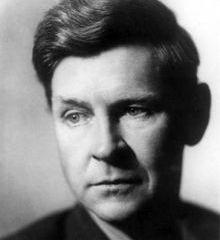
Author

Olaf Stapledon
Olaf Stapledon

Olaf Stapledon, born on May 10, 1886, in Scotland, and died on September 6, 1950, was a philosopher and writer. His works encompassed cosmic philosophy, life philosophy, and socialist ideas, which had a profound impact on later generations. more

You May Also Like

“It is enough to have been created, to have embodied for a moment the infinite and tumultuously creative spirit. It is infinitely more than enough to have been used, to have been the rough sketch for some perfected creation. Looking into the future, I saw without sorrow, rather with quiet interest, my own decline and fall.”

“[S]ervants of darkness had no lasting joy in their service. In all of them the will for darkness was a perversion of the will for the light. In all but a few maniacs the satisfaction of the will for darkness was at all times countered by a revulsion which the unhappy spirit either dared not confess even to itself, or else rejected as cowardly and evil.”

“[T]he individual in whom the will for the light is strong and clear finds his heart inextricably bound up with the struggle of the forces of light in his native place and time. Much as he may long for the opportunity of fuller self- expression in a happier world, he knows that for him self-expression is impossible save in the world in which his mind is rooted. The individual in whom the will for the light is weak soon persuades himself that his opportunity lies elsewhere.”

“It seemed to me that I now saw the Star Maker in two aspects: as the spirit's particular creative mood that had given rise to me, the cosmos; and also, most dreadfully, as something incomparably greater than creativity, namely as the eternally achieved perfection of the absolute spirit. Barren, barren and trivial are these words. But not barren the experience.”

“In that instant when I had seen... the Star Maker, I had glimpsed, in the very eye of that splendor, strange vistas of being; as though in the depths of the hypercosmical past and the hypercosmical future also, yet coexistent in eternity, lay cosmos beyond cosmos.”