Quotessence
Home / Quotes / Quote by Pankaj Mishra

Quote by Pankaj Mishra

“I am happy to accept that badge of ambivalence if that means some progress in dismantling this false opposition: writers boldly using their privileges of free speech in the morally superior West versus pathetic wimps in repressive countries we don't like.”

Quote by Pankaj Mishra

Author
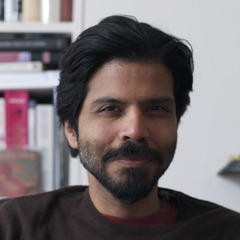
Pankaj Mishra
Pankaj Mishra

Pankaj Mishra is an Indian-born British essayist and historian, recognized for his insightful and critical essays on history, politics, and culture. Born in 1969, he has gained attention for his exploration of the complexities of modernity and its effects on the world. more

You May Also Like

“There are some serious limitations in Mo Yan's situation as a writer in China today - just as there are for Jia Zhangke, one of the world's greatest film directors. He can only phrase his dissent obliquely, in his art. Writers in "free" societies labor under no such constraints. They can write more or less whatever they want in both their fiction and their commentary. Yet so many of them look oddly inhibited, even timid, and depressingly a couple of prominent figures actually positioned themselves to the right of their governments, intelligence agencies, and corporations.”

“I guess I am nostalgic for a time - the nineteenth century and early twentieth - when writers were, to use Stefan Collini's phrase, "public moralists" and politicians, plutocrats, bankers, arms dealers, and experts and technocrats were not solely defining the moral norms as well as the political lives of our societies. We do have some writers claiming to be public moralists, but, as I said, they have actually been more jingoistic than even the henchmen of Bush and Blair.”

“In the end, of course, all novelists will be judged by their novels, but let's not forget that we will also need new ways of assessing the latter. There are people who will continue to write nineteenth-century novels in the early twenty-first, and even win major prizes for them, but that's not very interesting, intellectually or emotionally.”

“Dickens didn't have access to any other epistemologies other than those prevailing in Britain. But a novelist today cannot plausibly claim ignorance of his society's manifold connections with the wider world, the fact that prosperity and security at home, for instance, often depend on extensive violence and exploitation abroad.”

“I think that Indian writing in English is a really peculiar beast. I can't think of any literature - perhaps Russian literature in the nineteenth century comes close - so exclusively produced by and closely identified with a tiny but powerful ruling elite, the upper-caste, Anglophone upper middle class, and dependent for so long on book buyers and readers elsewhere.”

“Writers in the nineteenth century - people like George Eliot and Flaubert - were accustomed to addressing particular communities with which they shared not only linguistic meanings but also an experience and history. Those communities have progressively split in the twentieth century, and grown more heterogeneous, and writers emerging from minority communities have found themselves addressing audiences closer to their experience and history - a phenomenon derided by conservative white men as identity politics and multiculturalism in the arts.”