Quotessence
Home / Quotes / Quote by Nicholas Murray Butler

Quote by Nicholas Murray Butler

“The words that bore the deathless verse of Homer from bard to a group of fascinated hearers, and with whose fading sounds the poems passed beyond recall, are fixed on the printed page in a hundred tongues. They carry to a million eyes what once could reach but a hundred ears.”

Quote by Nicholas Murray Butler

Work

Philosophy

Philosophy is a broad discipline that encompasses the study of various fundamental questions about the nature of reality, the principles of rational thought, and the nature of human knowledge and understanding. It explores concepts such as the nature of existence, the nature of reality, the nature of knowledge, the nature of values, the nature of reason, the nature of the mind, and the nature of language. more

Author

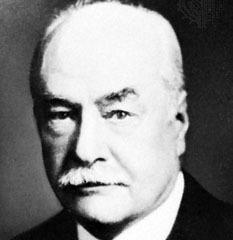
Nicholas Murray Butler

Nicholas Murray Butler, born on April 2, 1862, and died on December 7, 1947, was an American diplomat renowned for his contributions to the field of diplomacy and the development of international relations theory. more

You May Also Like

“Zen is to religion what a Japanese "rock garden" is to a garden. Zen knows no god, no afterlife, no good and no evil, as the rock-garden knows no flowers, herbs or shrubs. It has no doctrine or holy writ: its teaching is transmitted mainly in the form of parables as ambiguous as the pebbles in the rock-garden which symbolise now a mountain, now a fleeting tiger. When a disciple asks "What is Zen?", the master's traditional answer is "Three pounds of flax" or "A decaying noodle" or "A toilet stick" or a whack on the pupil's head.”

“Einstein's space is no closer to reality than Van Gogh's sky . The glory of science is not in a truth more absolute than the truth of Bach or Tolstoy, but in the act of creation itself. The scientist's discoveries impose his own order on chaos, as the composer or painter imposes his; an order that always refers to limited aspects of reality, and is based on the observer's frame of reference, which differs from period to period as a Rembrant nude differs from a nude by Manet.”

“Indeed, the ideal for a well-functioning democratic state is like the ideal for a gentleman's well-cut suit it is not noticed. For the common people of Britain, Gestapo and concentration camps have approximately the same degree of reality as the monster of Loch Ness. Atrocity propaganda is helpless against this healthy lack of imagination.”

“If time is treated in modern physics as a dimension on a par with the dimensions of space, why should we a priori exclude the possibility that we are pulled as well as pushed along its axis? The future has, after all, as much or as little reality as the past, and there is nothing logically inconceivable in introducing, as a working hypothesis, an element of finality, supplementary to the element of causality, into our equations. It betrays a great lack of imagination to believe that the concept of "purpose" must necessarily be associated with some anthropomorphic deity.”

“All "if" statements about the past are as dubious as prophecies of the future are. It seems fairly plausible that if Alexander or Ghengis Khan had never been born, some other individual would have filled his place and executed the design of the Hellenic or Mongolic expansion; but the Alexanders of philosophy and religion, of science and art, seem less expendable; their impact seems less determined by economic challenges and social pressures; and they seem to have a much wider range of possibilities to influence the direction, shape and texture of civilizations.”

“It is impossible to decide whether a particular detail of the Pythagorean universe was the work of the master, or filled in by a pupil a remark which equally applies to Leonardo or Michelangelo . But there can be no doubt that the basic features were conceived by a single mind; that Pythagoras of Samos was both the founder of a new religious philosophy, and the founder of Science, as the word is understood today.”