Quotessence
Home / Quotes / Quote by Mark Epstein

Quote by Mark Epstein

“Buddhism teaches us that happiness does not come from any kind of acquisitiveness, be it material or psychological. Happiness comes from letting go. In Buddhism, the impenetrable, separate, and individuated self is more of the problem than the solution.”

Quote by Mark Epstein

Author
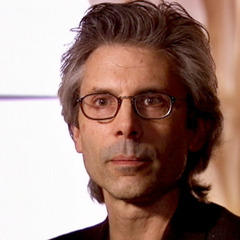
Mark Epstein
Mark Epstein

Mark Epstein is a renowned author born in 1953. His works primarily explore the intersection of Buddhist philosophy and psychology, as well as the application of these ideas in contemporary life. more

You May Also Like

“When we seek happiness through accumulation, either outside of ourselves-from other people, relationships, or material goods-or from our own self-development, we are missing the essential point. In either case we are trying to find completion. But according to Buddhism, such a strategy is doomed. Completion comes not from adding another piece to ourselves but from surrendering our ideas of perfection.”

“I am responsible for what I see. I can elect to change all thoughts that hurt. I could see peace instead of THIS. The past is over it can touch me not. This instant is the only time there is. Today I will judge nothing that occurs. I am not the victim of the world I see. I can escape from the world I see by giving up attack thoughts. I am determined to see things differently. I am never upset for the reason I think. Forgiveness is the key to happiness. All that I give I give to myself.”

“My father once told me of a trick question he used in a college class on forest fire control. If there was a fire coming from a certain direction and wind was coming from another, what was the best thing to do? The right answer was, "Run like hell and pray for rain," but few students ever got it. So allow yourself the freedom of knowing there are times to bail out, quit, run, leave the struggle, and have more time for joy.”

“You don't realize that if you stop looking backwards craving the love and acceptance which you didn't receive from your parents, then you might open your eyes to what is available for you now. But you won't let go. If only you could see that looking back into an incomplete and imperfect past, with regret, blame, guilt or resentment is keeping you from the treasures that await you here now. The past has gone. You cannot rectify something that is no longer with you.”

“We find by losing. We hold fast by letting go. We become something new by ceasing to be something old. This seems to be close to the heart of that mystery. I know no more now than I ever did about the far side of death as the last letting-go of all, but now I know that I do not need to know, and that I do not need to be afraid of not knowing. God knows. That is all that matters.”