Quotessence
Home / Quotes / Quote by Charles Dickens

Quote by Charles Dickens

Work

The Works of Charles Dickens: Letters and Speeches

The book offers a comprehensive look into the correspondence and oratory of Charles Dickens, providing insight into his thoughts, experiences, and societal observations throughout his life. more

Author
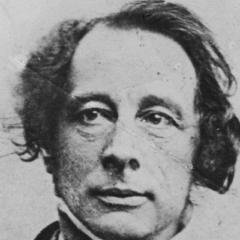
Charles Dickens
Charles Dickens

Charles Dickens, a British writer born on February 7, 1812, and died on June 9, 1870, is one of the greatest novelists of the 19th century. Known for his profound social criticism and vivid narrative style, Dickens' works extensively cover social reality, revealing various issues in the British society of the time. more

You May Also Like

“Under any religion, the preestablished impersonal code transcends the right of the individual to explore, experience, and marvel at the mysteries of his own life and death. Religions introduce us not to God but to slavery. They deprive us of our freedom to explore our own souls and to discover the endless and wondrous possibilities presented to us by an infinite universe. And most often the method of religions is fear, not love. They demand blind obedience and often obedience to dreadful dogma.”

“Perhaps what is really being proposed by the Evangelical fundamentalists is a return not to the 1950s family but to the family of biblical days. The Old Testament is clear that this was a strong patriarchal family. Men were permitted several wives and concubines. Children were legitimately conceived by these concubines outside of marriage. . . . Is this the Evangelical's idea of an ideal family?”

“Biblical backing for Mormon behavior is easy to find, although Mark Twain is reported to have denied its legitimacy to a Mormon. The Mormon claimed polygamy was perfectly moral and he defied Twain to cite any passage of Scripture which forbade it. 'Well,' said Twain, 'how about that passage that tells us no man can serve two masters at the same time?'”

“The period of Catholic ascendancy was on the whole one of the most deplorable in the history of the human mind. . . . The spirit that shrinks from enquiry as sinful and deems a state of doubt a state of guilt, is the most enduring disease that can afflict the mind of man. Not till the education of Europe passed from the monasteries to the universities, not till Mohammedan science, and classical free thought, and industrial independence broke the sceptre of the Church, did the intellectual revival of Europe begin.”